Kids Craft Corner – Repurpose A Plastic Container

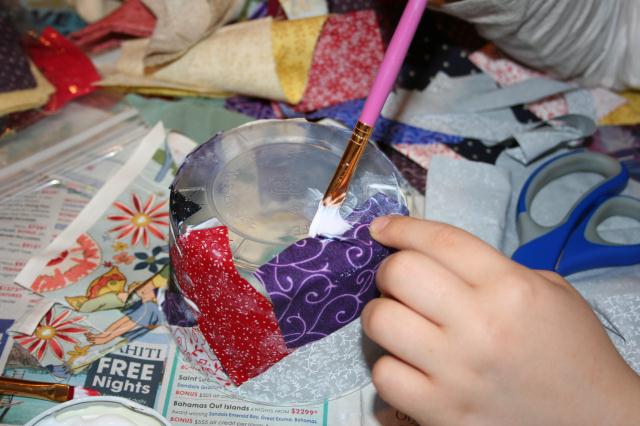
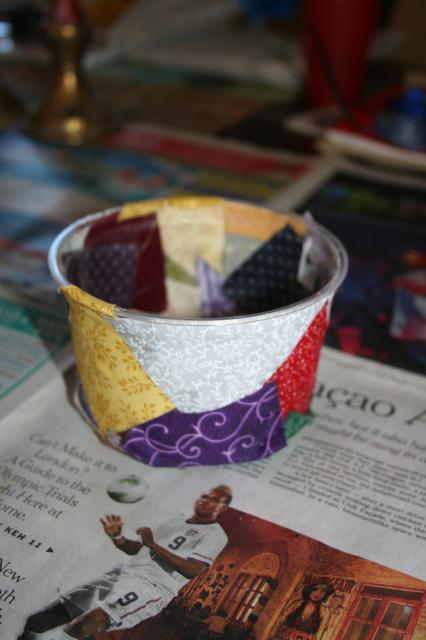
The food we purchase comes in all types of containers – from plastic wrap, cardboard boxed and plastic containers.  I save many of the yogurt, hummus, bulk item containers and re-use them for storage, craft items, etc.  I thought why not re-purpose them into containers that can be given as gifts, hold change, hair accessories, littlest pet shops (if you have a daughter or granddaughter you may know what these are).  I had thought about using paper mache to cover the containers at first, but then decided on the decoupage glue we had in the crafts cabinet – not as messy or as much prep.

Repurposed Plastic Containers
Items needed

Glue and water if doing paper mache
Decoupage glue
Plastic containers – any size or shape. washed and dried
Scrap material, tissue paper, magazine pages, craft design paper
Paint brushes
Newspaper (for paper mache and for protecting your work area)
Dish for glue
Glue

1. Cover you work area and place your materials in the middle.

2. Decide what material (s) you are going to use and prepare your materials, cut you fabric, paper or tear tissue paper.

3. Since we used decoupage glue – using your paint brush paint the back of your material, place on the container and paint some glue on top.

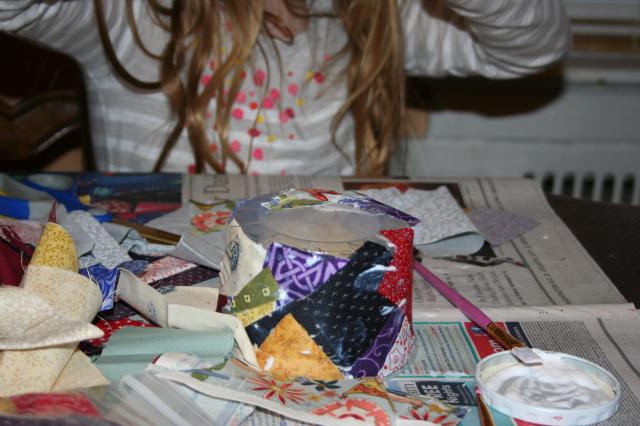


4. Repeat step 3 until your container is covered – you may need to allow layers to dry before proceeding.

5. Remember to stop, have fun and act silly!

If using paper mache – cover the bowl first and then follow with decorative items (old sheet music, tin foil, old stamps, etc – you will need to use straight glue to affix these items).  Allow to dry and then do one coat of white tissue paper.

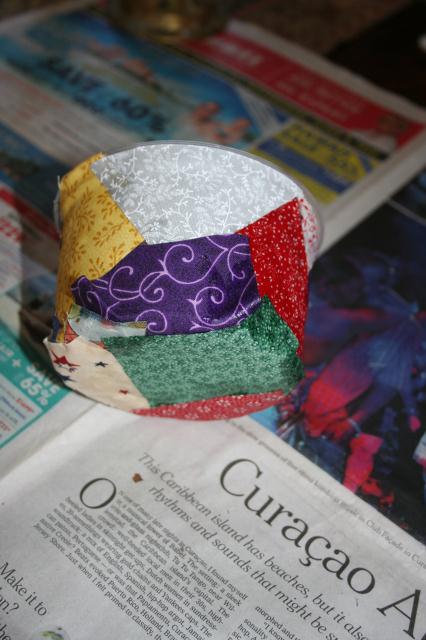
I used decorated craft paper and covered the outside and inside of my container.  Stella used scrap material she cut into shapes and decided it would be cool to just cover the outside.  We have not decided what treasure will find their home in our new repurposed plastic containers.
Digiprove sealCopyright secured by Digiprove © 2012
Posted in Kids Crafts | Tagged , , , | 5 Comments

OK – Really – Last Parsnip Recipe (for this year!) – Roasted Parsnip Soup

When this soup recipe was forwarded to me from one of my aunts – I checked the ingredients list and having everything went about making it.  Note that I halved the recipe – not sure that Stella would eat it and with the weather warming up – not sure how many nights I would want hot soup.  The recipe listed is the original recipe.

Roasted Parsnip Soup

Ingredients

2 lbs. parsnips, washed, peeled and cut into 2″ pieces
1/4 cup olive oil
1 1/2 tsp kosher salt (I used sea salt)
1 medium onion, diced
1 stalk of celery cut into small pieces
1 bay leaf
1 1/2 quart veggie broth

1. Preheat the oven to 350 degrees.

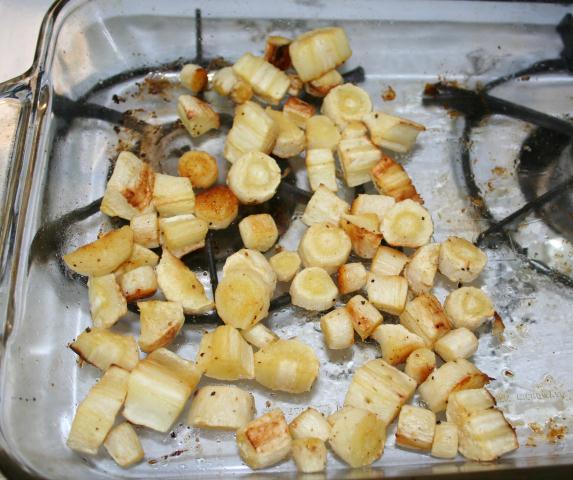
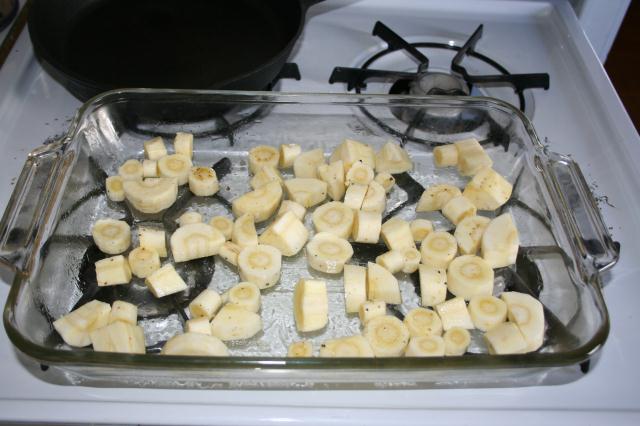
2. Prepare the parsnips and place in a pan, toss with 2 Tbl olive oil and salt and pepper – making sure all is covered.  You want to roast them in a single layer.  Roast for about 50 minutes or until the parsnips are fork tender.  About every 15 minutes toss the parsnips.

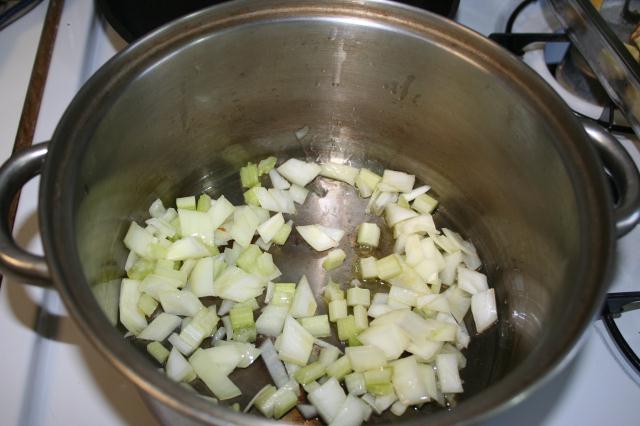
3. Heat the remaining oil in a large pot over medium heat until hot.  Add the onion, celery, 1 tsp salt and 1/8 tsp pepper and cook about 5 minutes or until soft.

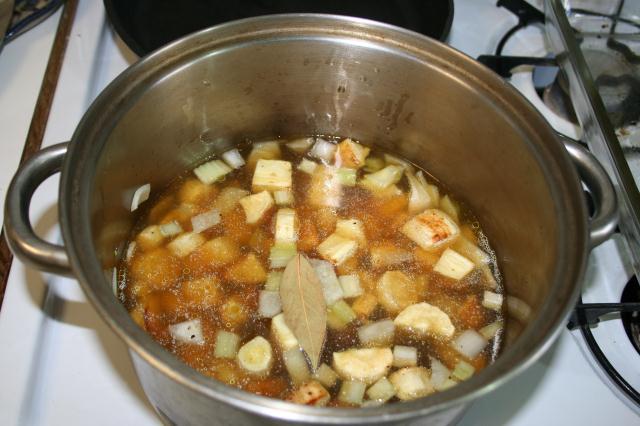
4. Cut away any burnt parts of the parsnips – add the parsnips to the pot, along with the bay leaf and broth.  Increase the heat and bring to a boil.

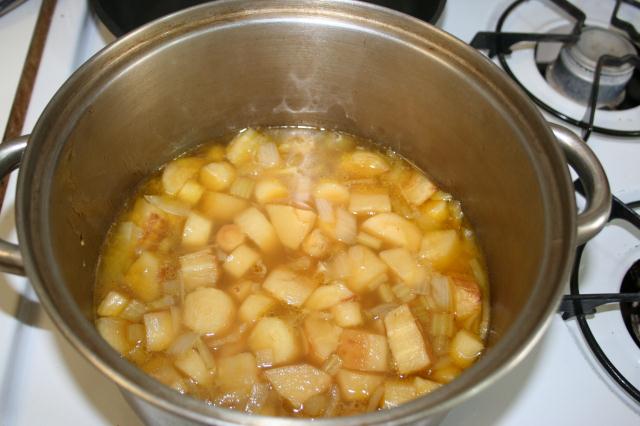
5. Reduce heat and partially cover the pot, simmer until the parsnips fall apart easily – about 30 minutes.

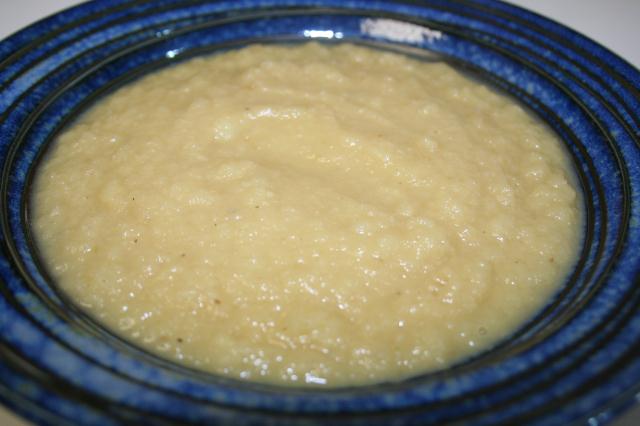
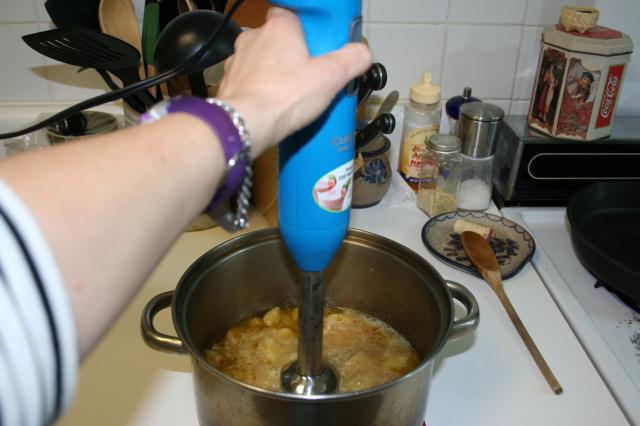
6. Remove the bay leaf and puree the soup until smooth.  If too thick add some water.

I loved this soup, Stella did not.  This is definitely going into the favorite recipe folder!

Digiprove sealCopyright secured by Digiprove © 2012
Posted in Recipes, Soup | Tagged , , | 3 Comments

How To Make Quilted Pot Holders

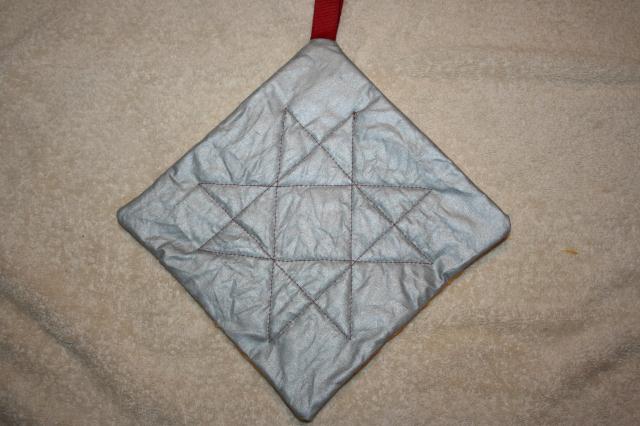
Pot holders are one of those items that I never buy. I am not sure how I have the ones that I do, maybe they were gifts, but I have had the ones that I have it seems forever.  Whenever I go into a second hand store I always look at the books and about 3 years ago I came across a couple of crafting books – I think from the 70’s, looking at some of the pictures – but some of the crafts I really wanted to try my hand at.  One of them being quilted pot holders.  I love to quilt and have lots of scrap fabric and a collection of fat quarters – so I figured it was time to try them.  The only thing I did not have was ironing board cover fabric, but that was easily acquired at the local fabric store, a little pricey, but not much is needed.  I have found with patterns, after doing Stella’s quilt, that it is better to get a little extra than to wind up with not enough!  After cutting out the material that I needed for the pot holders that I wanted to make I had some extra ironing board cover material so I made a set of Christmas pot holders – maybe for me or a gift – not sure – but I have time to decide.

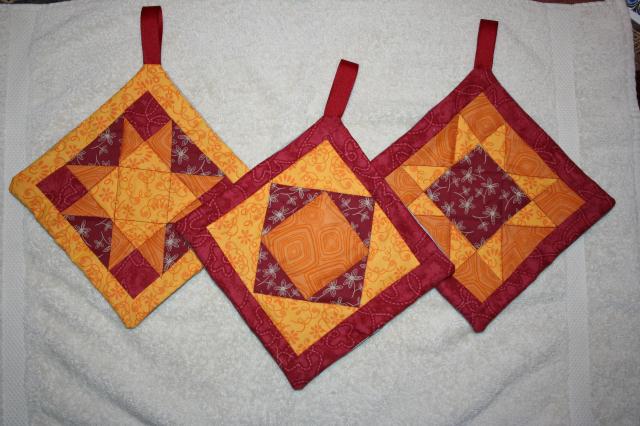
Quilted Pot Holders (to make 3, thanks to Best Selling Bazaar Patchwork)

Items needed

Assortment of scrap cotton material
1/4 yard cotton batting
1/4 yard ironing board cover fabric (silver silicone coated)
1/2 yard of 3/8″ grosgrain ribbon
Thread to match
Template material or scrap card board

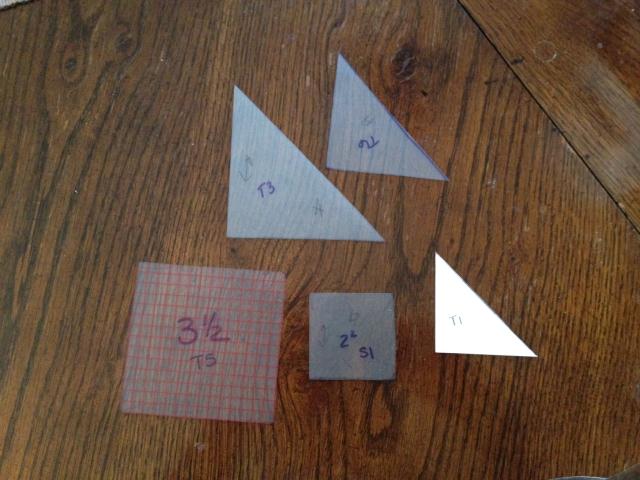
1. Cut your templates out.

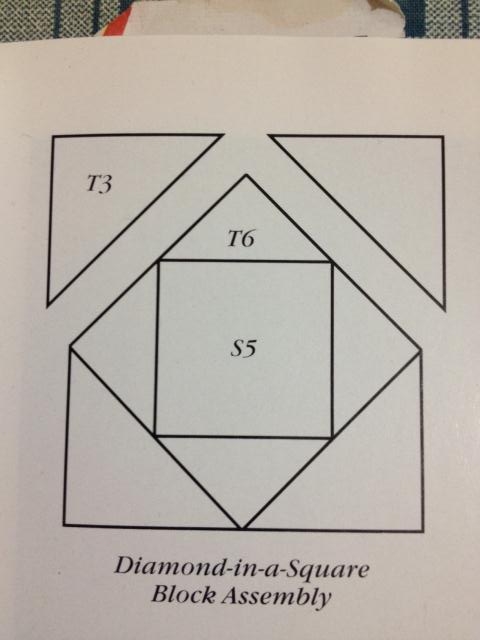
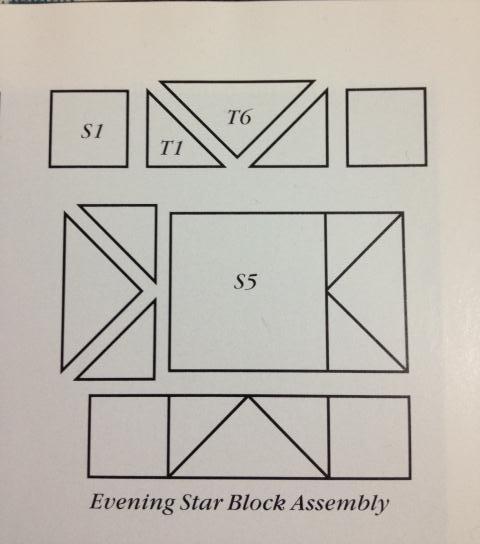
T1 – right triangle (side and bottom legs measure 2 1/4″, long side measures 3 1/4″
T3 – right triangle (side and bottom legs measure 4 7/8″, long side measures 5 1/4″)
T6 – right  triangle (side and bottom legs measure 3″ and long side measures 4 1/4″)
S1 – square (all sides 2″)
S5 – square (all sides 3 1/2″)


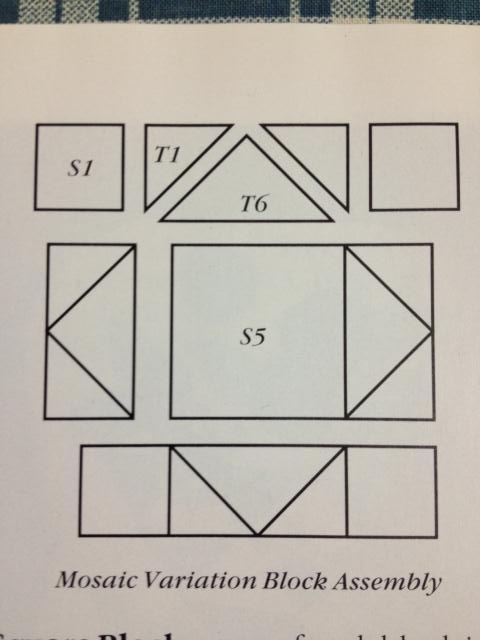
2. Cut your fabric out following the design patterns.  In addition to the pattern pieces you will need to cut for each pot holder 2 strips 1 1/2″ x 6 1/2″ and 2 strips 1 1/2″ x 8 1/2″ (these are the border strips), (1) 8 1/2″ square of patting, (1) 8 1/2″ square of ironing board fabric and (1) 6″ strip of ribbon for hanger.

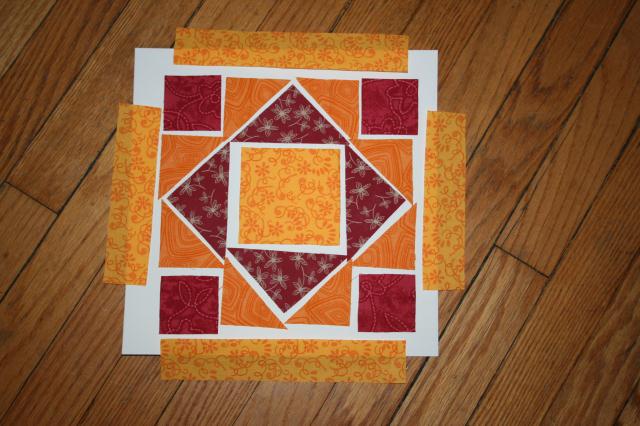
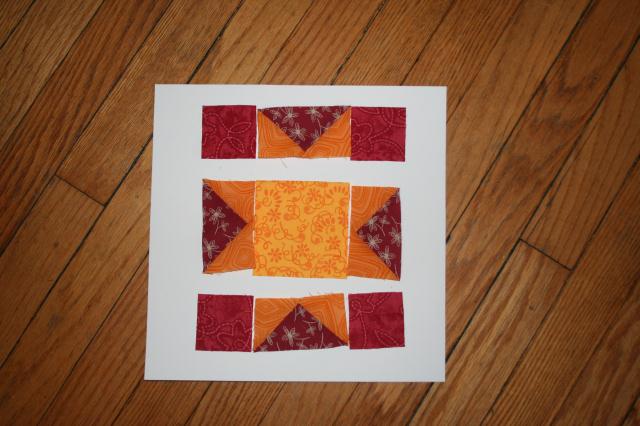
Mosaic

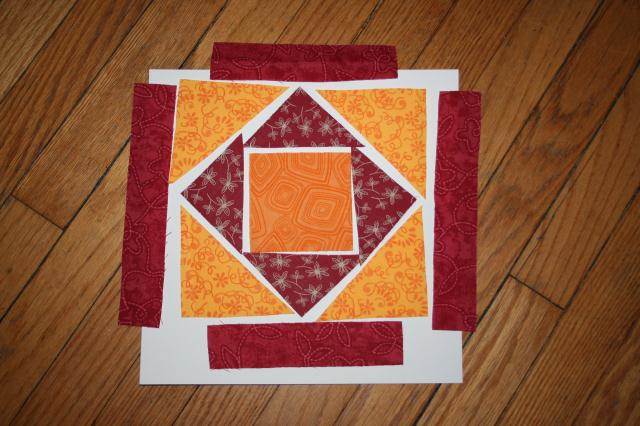
Diamond in a Square

Evening Star


3. I like to lay the fabric out in the pattern, and even though I did that I still made 2 of the same, instead of 1 of each pattern – go figure! I flipped the rows when sewing together.


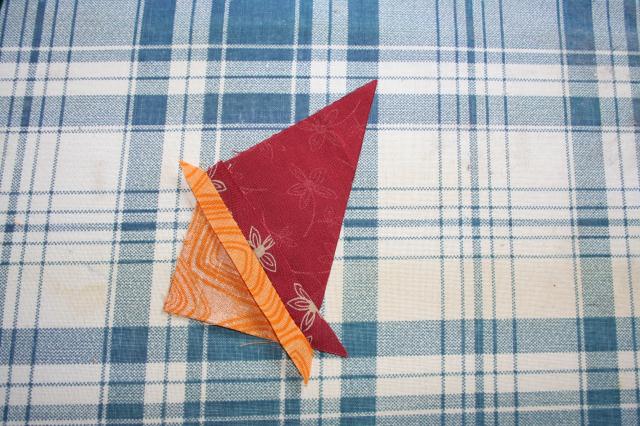
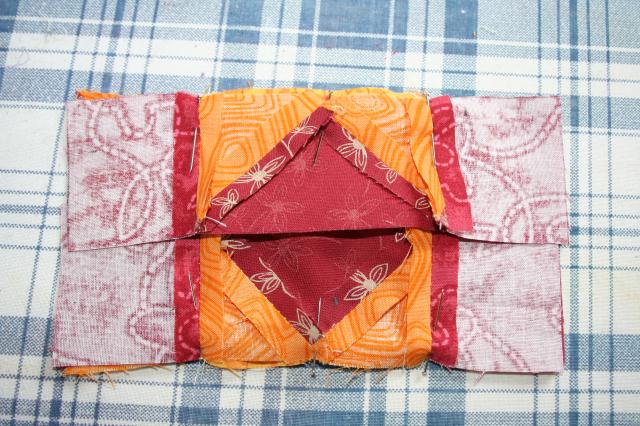
4. Sewing the pattern together.  I make squares, if possible and then sew rows together.  Pressing seams open as I go and trimming to make straight edges.  Some people like to press their seams going towards the center – but I was taught open – so that is what I do.


5. With right sides facing, pin the 6 1/2″ strips to opposite sides of square and sew.  Press seams and then sew the 8 1/2″ strips on the other sides – press seams.

6. Assemble your pot holder by stacking the batting then the quilt pattern square (right side up) and the ironing board fabric (right side down).


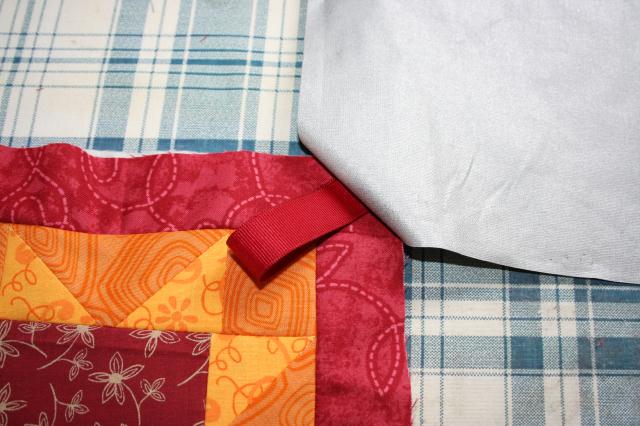
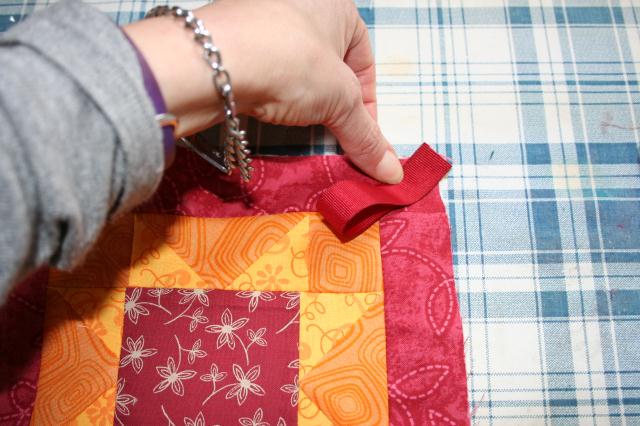
7. Place your ribbon in the corner that you want it, loop – with ends sticking out a little from edge of fabric – pin all pieces together.


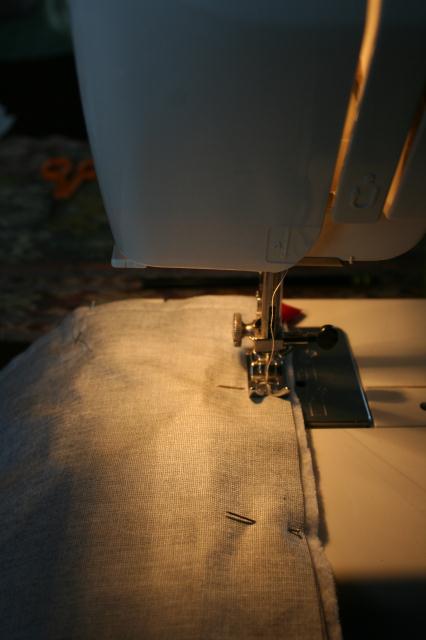
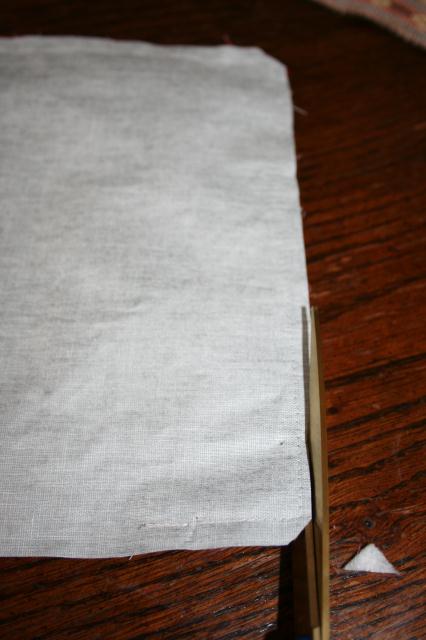
8. Sew the pot holder together, leaving an opening on the bottom for turning.  Trim corner and seams, turn right side out and press.  Slip stitch opening closed.


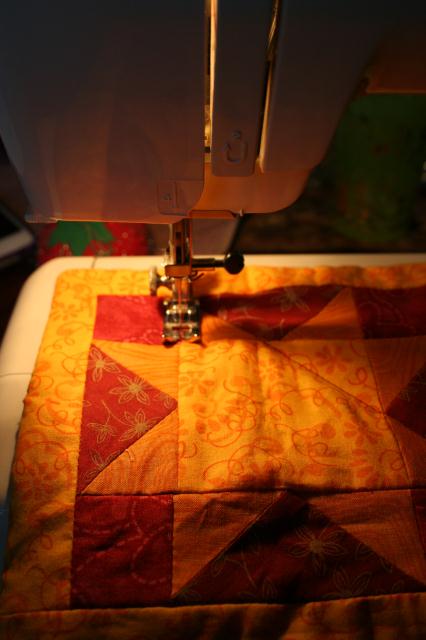
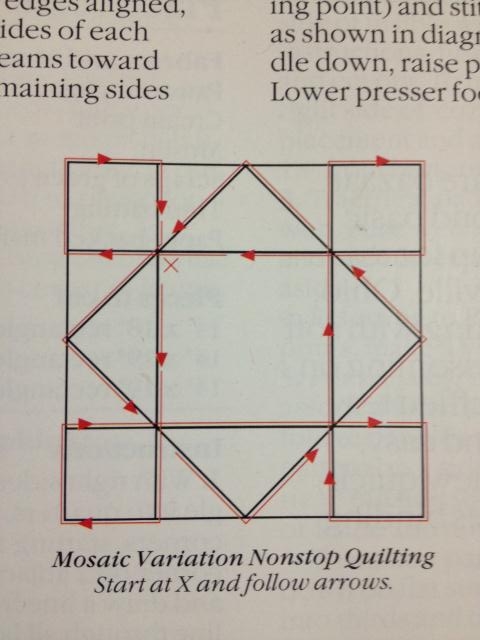
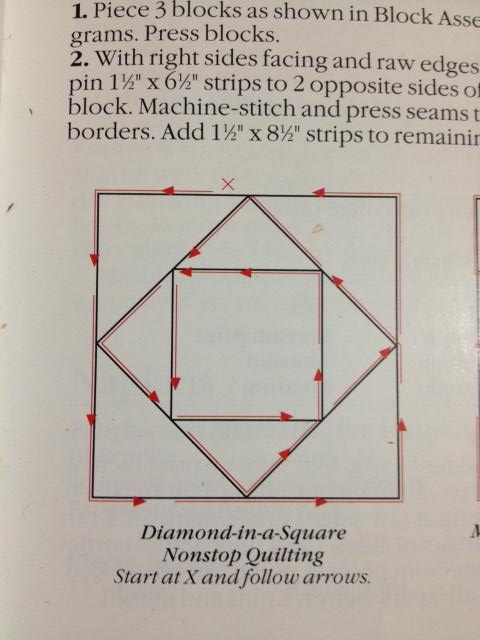
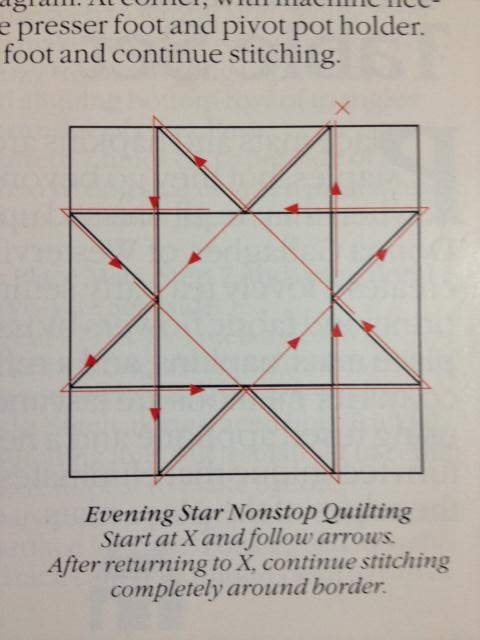
9.  Using your sewing machine, quilt your pot holder.  Follow the diagram below for each pattern.  Start at the X and follow the arrows.


Mosaic Quilt Pattern

Diamond Quilt Pattern

Evening Star Quilt Pattern


Go bake a dish so you can use your new pot holders!

Digiprove sealCopyright secured by Digiprove © 2012
Posted in Crafts, Quilting | Tagged , | 2 Comments

Have Books – Need Shelves!

We are avid readers in our household and have a book in our hands way more often than the TV is on or a movie watched.  As part of Stella’s homework each evening she is to read for at least 20 minutes and write about what she reads, but in addition to that she reads for 30 minutes each evening after getting into bed.  The problem is that Stella has a loft bed and when it is time for lights out the books either end up under her pillow or somewhere in her bed or they land on the floor which always makes me jump when I hear it hit and think did she fell out of bed!  I, myself, have to read each night before turning my light off – even if it is 2am when I am climbing between the sheets – but I place my books on my nightstand – the pile being quite high since I usually am reading several things at once.

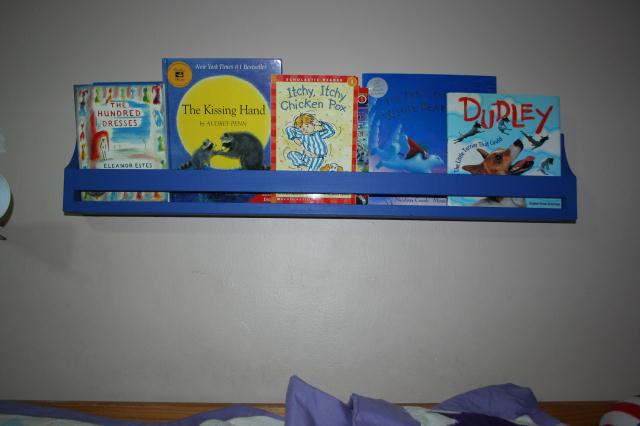
I have been in search for several months for something to hold Stella’s book near her bed and was not able to find anything, so I decided I would build something, but what?  I searched and searched and as I was looking for building plans for something else I stumbled across a wonderful site www.ana-white.com .  This site has building plans for almost everything and the great thing is that they give you a shopping list, cut directions and step by step instructions.  Going through page by page, there it was, the shelves I had envisioned!!!!  I printed off the directions, went to Home Depot and was ready, but all my saws I had left in Colorado when we moved, ah my handy dandy neighbor – a call was made, the time was set and the excitement was building.

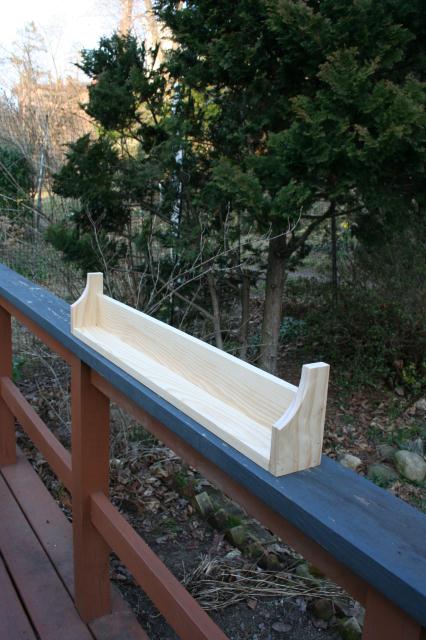
I went to my neighbors to cut the wood, but ended up staying and building the shelves with him – he wanted to see how they turned out – loved them and will be building some for their bathroom.

Flat Wall Book Shelves (http://ana-white.com/2009/11/plan-collector-shelf-knock-off-of_11.html)

Items needed (we made 3 shelves)

2 – 1×4 @ 8ft long
1 – 1×2 @ 8ft long
Wood glue
Wood filler
Sandpaper
Paint (I purchased the sample size paints, wish they had the eco paint that way!)
Paint brushes
Measuring tape
Hammer
Nails
Nail set
Circular saw
Jigsaw
Hanger hooks

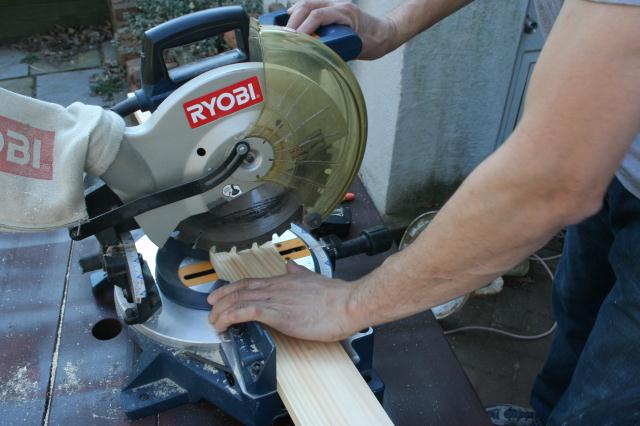
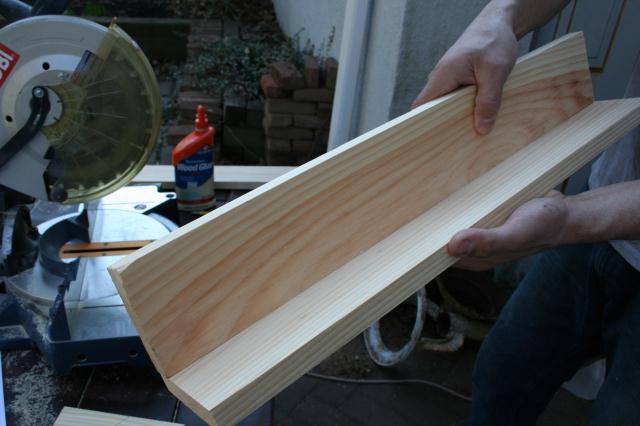
1. Cut your wood pieces: From each of the 1×4 pieces of wood, cut (2) 2ft long pieces (back on bottom of shelf) and (2) 6.5″ pieces (sides) you will have wood left over.

2. From the leftover wood, cut (1) 6.5″ from each piece (sides) and the the other 2 pieces will be your back and bottom.

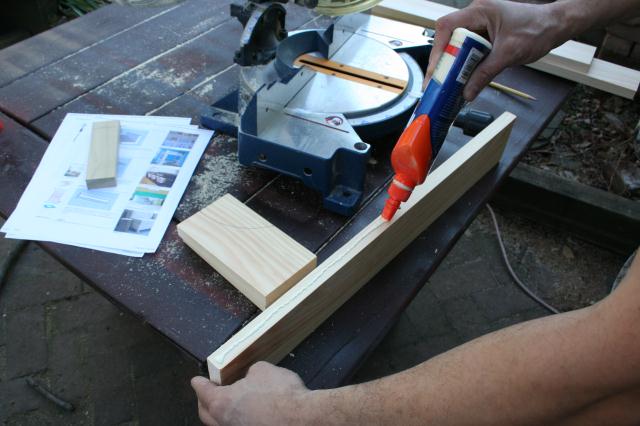
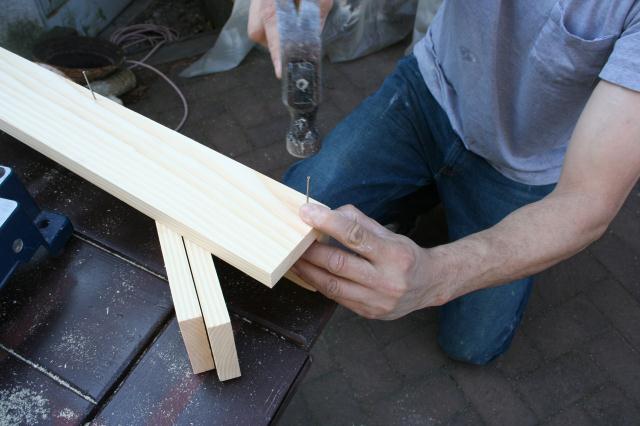
3. Glue and nail the back and bottom pieces together, set aside.


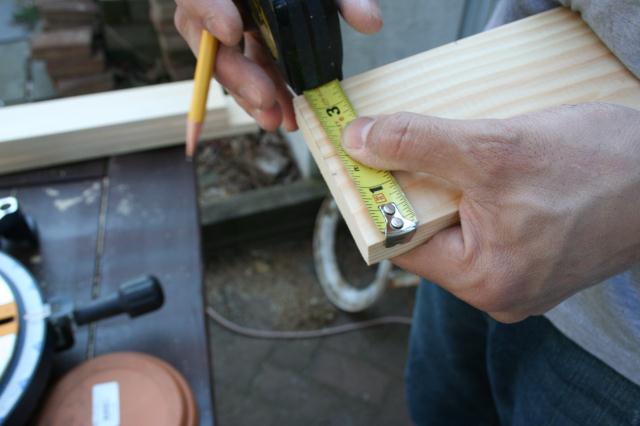
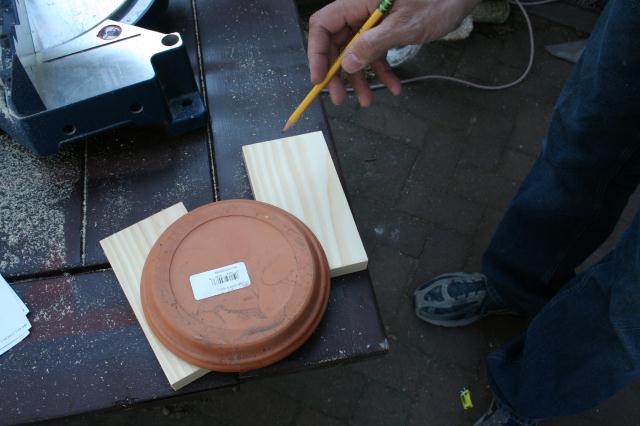
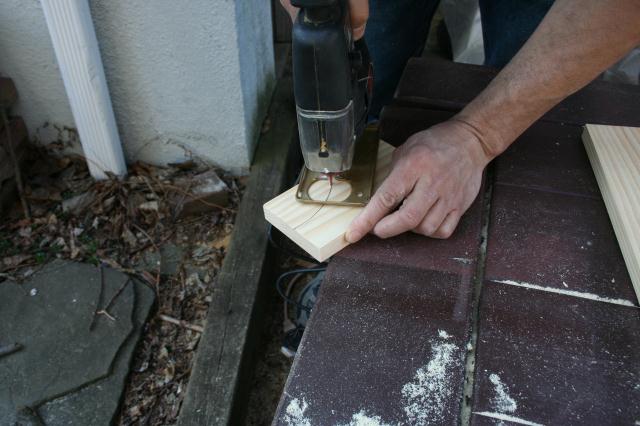
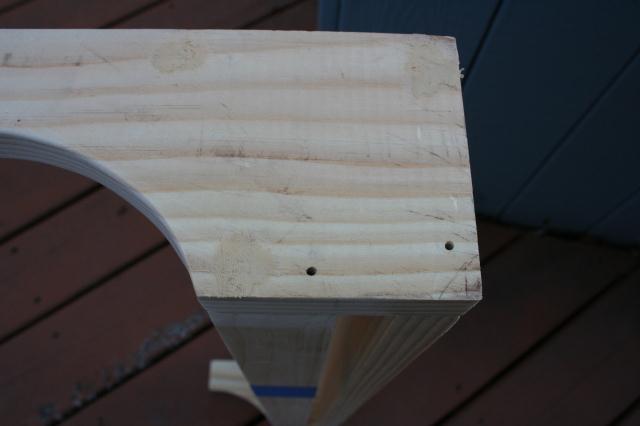
4. On the side pieces – measure 3″ going up side, mark.  From the top, opposite side of other mark, measure 1 1/2″ going across.  These are your guide marks.  Find a lid or plate and line up with marks – draw arch.  Using a jigsaw cut the curved line.  Do all other side pieces the same way using the first piece as your template.


5. Glue and nail your side pieces on.  You may have to sand the seams.  Set aside.

6. From the 1×2 piece of wood you need to cut the guard rails (3 – one for each shelf).  Measure the inside of side piece to side piece and cut the wood accordingly for each shelf.

7. Sand the guard rails, then glue and nail into place.

8. Using a nail set, set all nails.


9. Fill nail holes with wood filler, allow to dry and then sand.

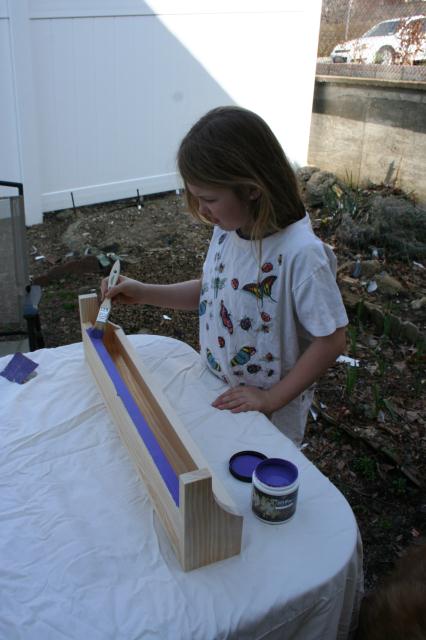
10. Paint your shelves.  Stella wanted her shelves purple and blue and since we had an extra shelf – I stained that one.  Stella painted her shelves.

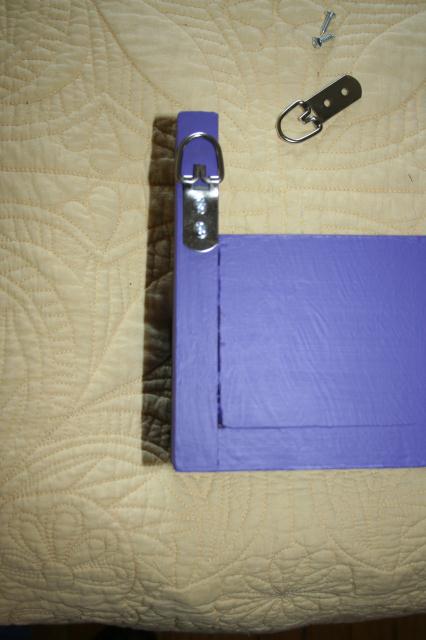
11. Put brackets on the back of the shelves and then hang!

Digiprove sealCopyright secured by Digiprove © 2012
Posted in Building, Crafts | Tagged , | 3 Comments

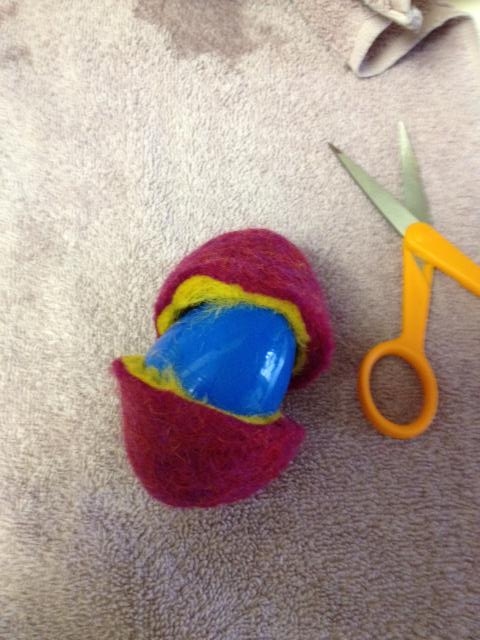
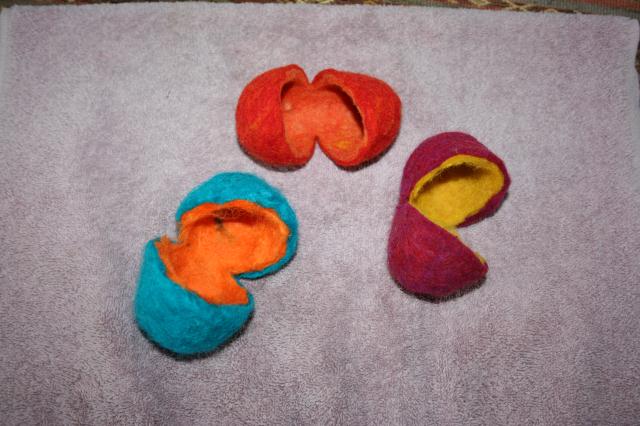
Surprise Felted Eggs

I could not help myself at trying my hand at these fun felted eggs! No felting needle needed, these are wet felted. I again have to thank the folks at http://livingfelt.com/ .  They have a great newsletter and wonderful tutorials, along with the fabulous felts and felting supplies!!  Stella wants me to try my hand at the felted chick that was in another one of their tutorials – maybe next Easter.  After Stella saws these – she wanted me to make enough for the Easter bunny to use for the egg hunt he does every Easter at our house!!  That is not happening.

Surprise Felted Eggs (http://livingfelt.com/blog/?p=3350)

Items needed

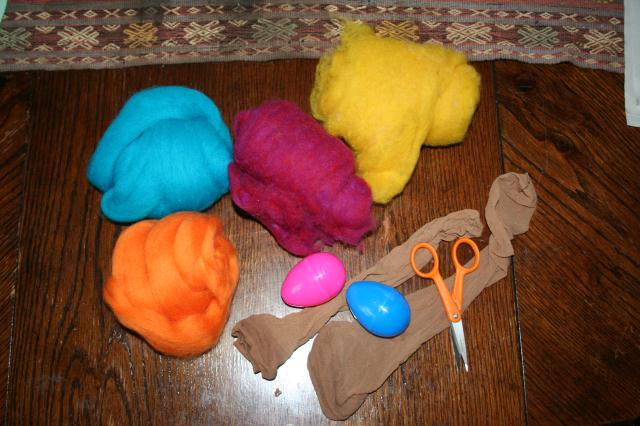
Plastic egg
Felt roving (2 colors)
Pantyhose (knee high)
Embroidery thread
Needle
Thread and/or wool roving for decorating the egg

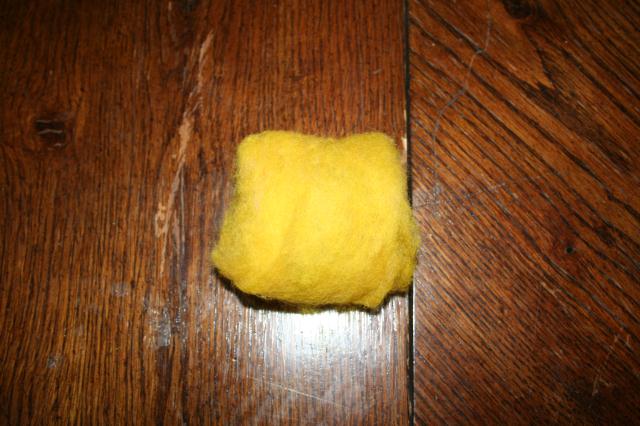
1. For the inside, with a thin layer of wool roving, tightly wrap around the middle of the plastic egg and the from top to bottom. Make sure the whole egg is covered.

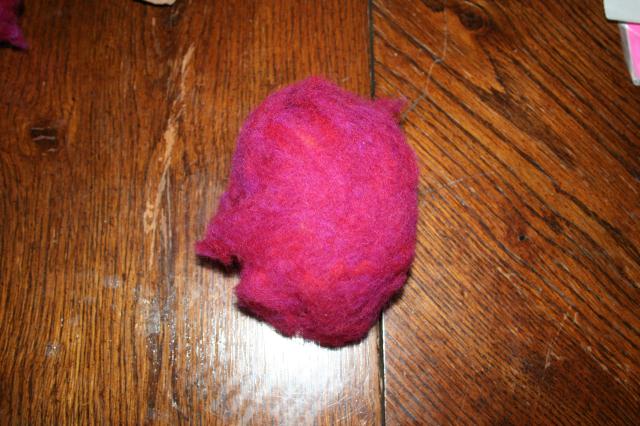
2. With another color of wool roving, tightly wrap a layer of wool around the middle and then from top to bottom.  Make sure there is no first layer color showing.


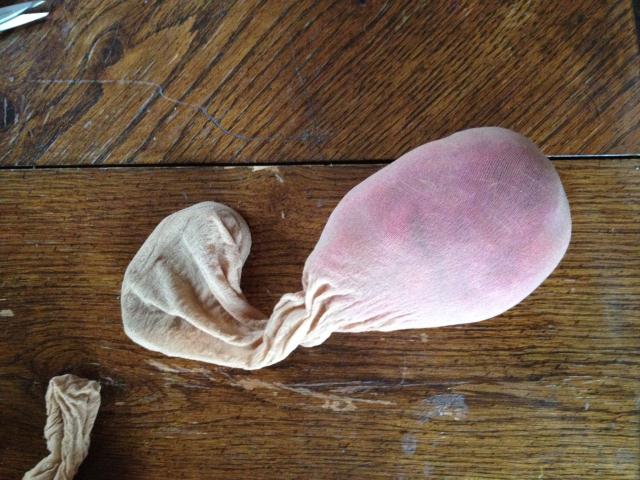
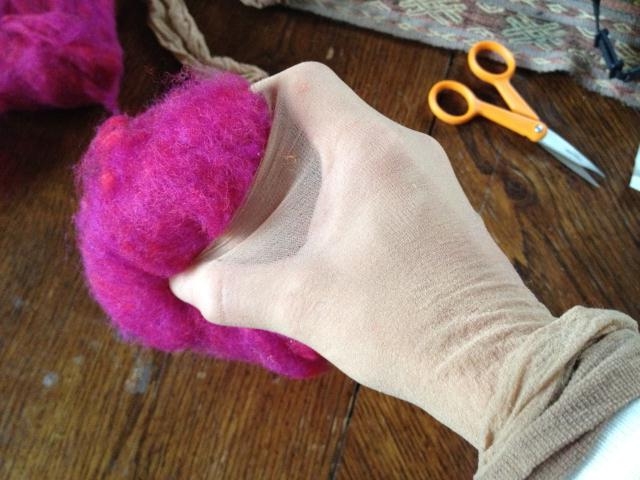
3.Place your hand inside the pantyhose and grab the egg, firmly – pull the stocking over the egg.


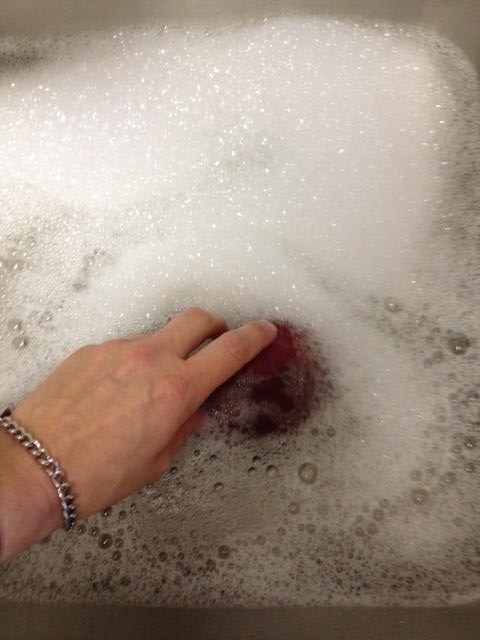
4. Fill a bowl or sink with hot water (as hot as you can stand) and soap.  The water should feel soapy.  Submerge the egg and squeeze the water through – making sure it is wet all the way through.  Squeeze and roll the egg in your hand – not too hard, you don’t want the plastic egg to open.  When the fibers start poking through the pantyhose – carefully peel the pantyhose off the egg.

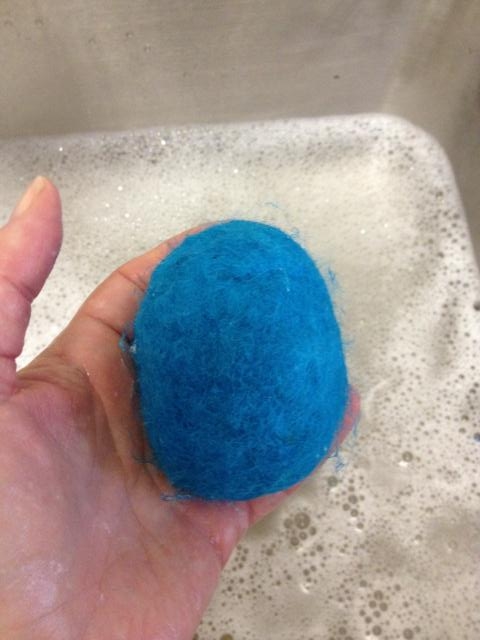
5. Continue squeezing and rubbing until the felt feels snug around the egg.  Do a cold/hot rinse making sure the soap is out of the felt.  Squeeze excess water out of egg.  Place egg on a towel and roll – get as much water out as possible.

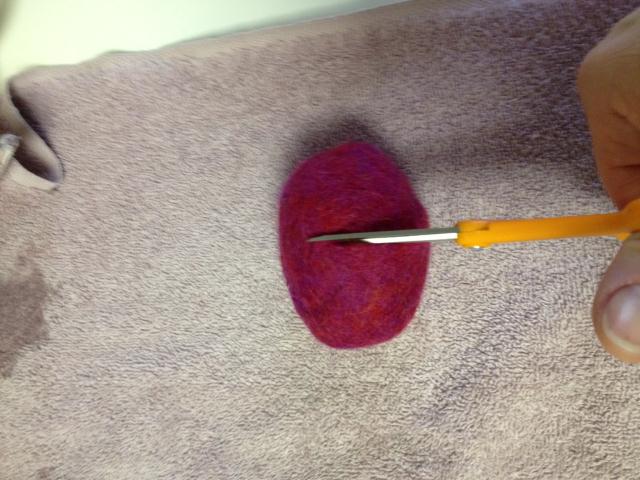
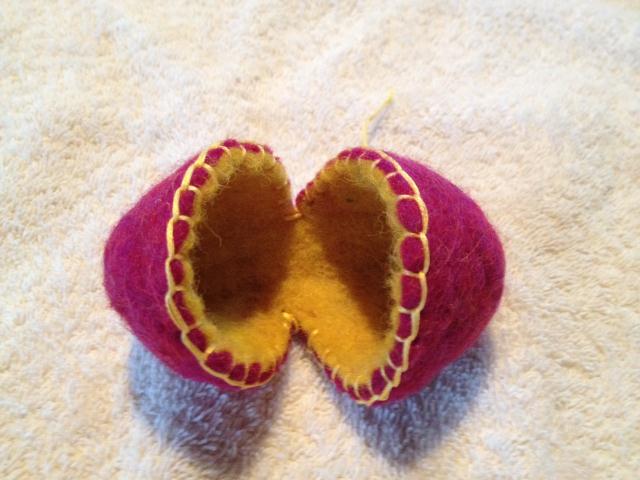
6. With sharp scissors, cut around the egg around the middle, leaving 2″ for the “hinge”.  Take the plastic egg out.  Allow to dry overnight.


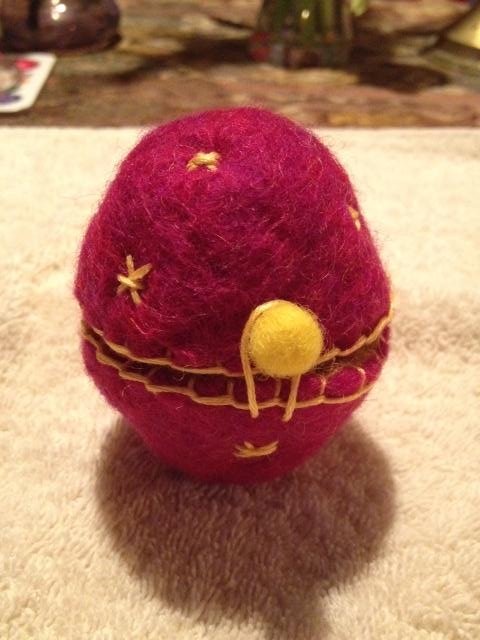
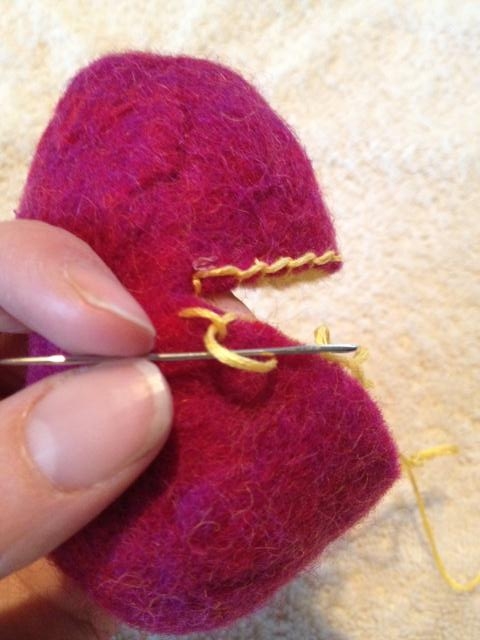
7. Using the blanket stitch, stitch around both edges.


8. Decorate the outside of the egg.  I used embroidery thread  to stitch stars.

Hide a little something inside – Surprise!

Digiprove sealCopyright secured by Digiprove © 2012
Posted in Crafts, Felting | Tagged , | 5 Comments

Kids Craft Corner – Blowing and Decorating Eggs

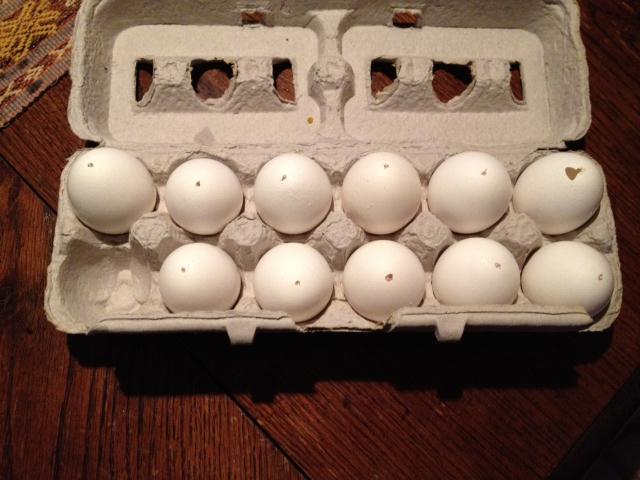
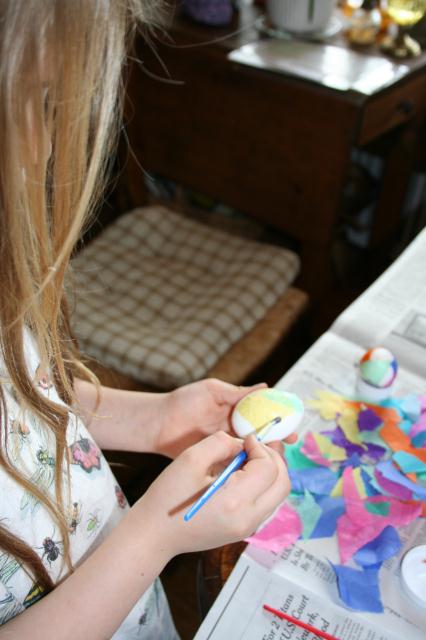
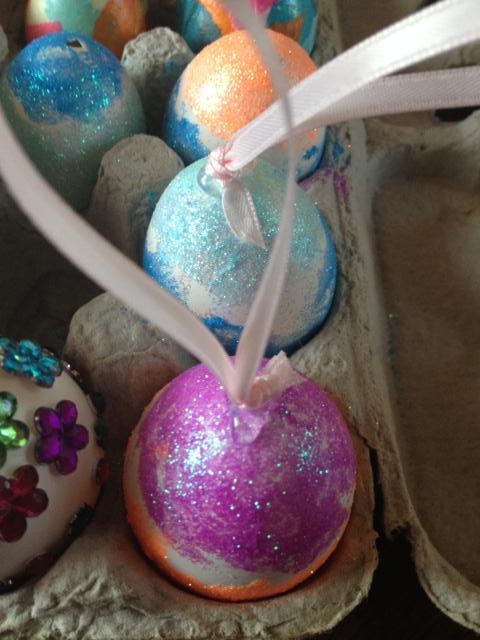
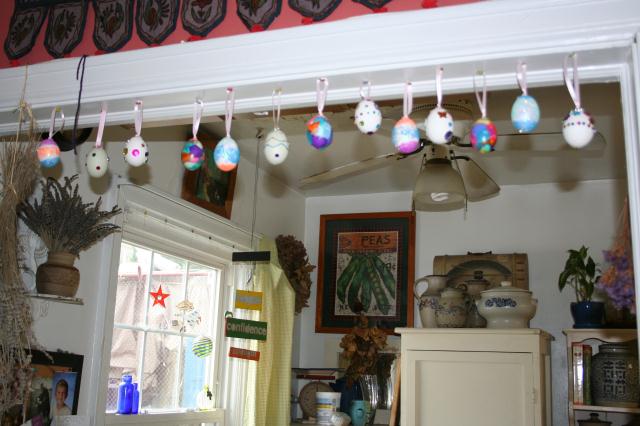
I have never been one that enjoys dying Easter eggs – you spend all that time making your eggs pretty and then they are gone!  We decided this year we would blow eggs and then decorate them, so that we would have Easter eggs that lasted.  We tried a couple of different decorating ideas – my favorite was the decoupage eggs and Stella’s was the gem covered eggs.  We hung them in the entrance way to the kitchen, this way we could see our decorated eggs from many different places in our home.  We started with a dozen eggs and ended up with 11!!!  I thought we would break more, so I was pretty impressed that only one broke – ok another broke, but we were able to salvage it.

Blowing and Decorating Easter Eggs

Items needed

Eggs
Nail
Toothpicks
Glass bowl
Straws or coffee stirrers
Decorations (we used glitter, stick on gems, tissue paper and decoupage glue)
Ribbon
Glue gun

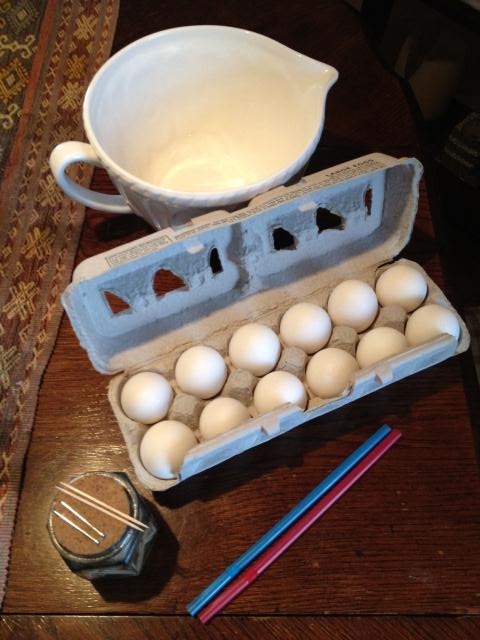
1. Get all your items together (eggs, nail, toothpicks, glass bowl and straws).  If using straws instead of coffee stirrer you will need to cut them in half.

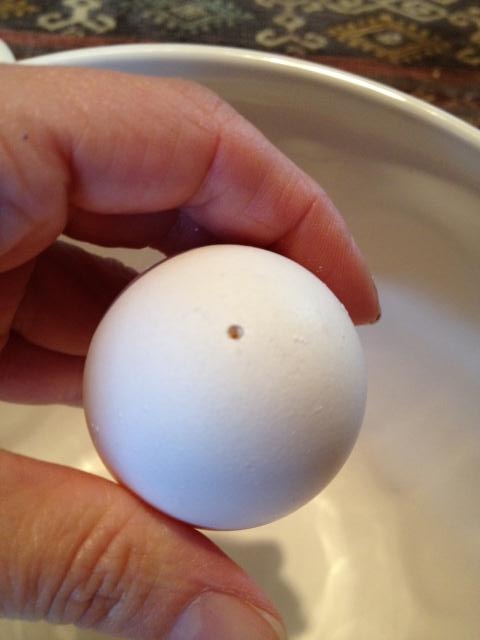
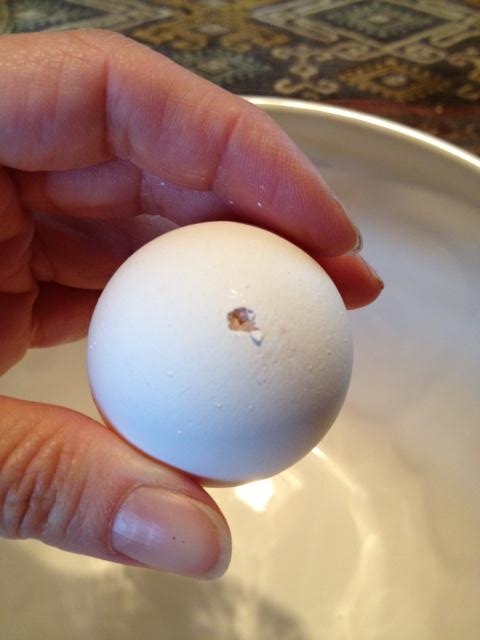
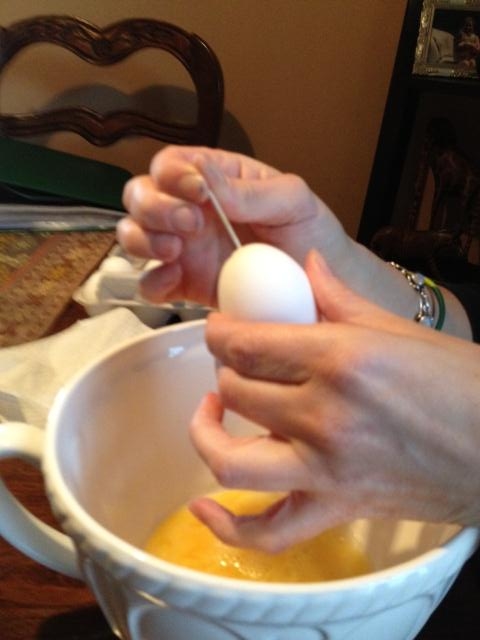
2. Taking your nail, hold the egg firmly and put a hole in both the top and bottom of the egg – sometimes there is a soft spot.  Make one hole bigger than the other, preferably the bottom hole.


3. Taking your toothpick, push in through the hole and jab a couple of times, you want to break up the yoke and membrane – this will make it easier to blow out the egg.

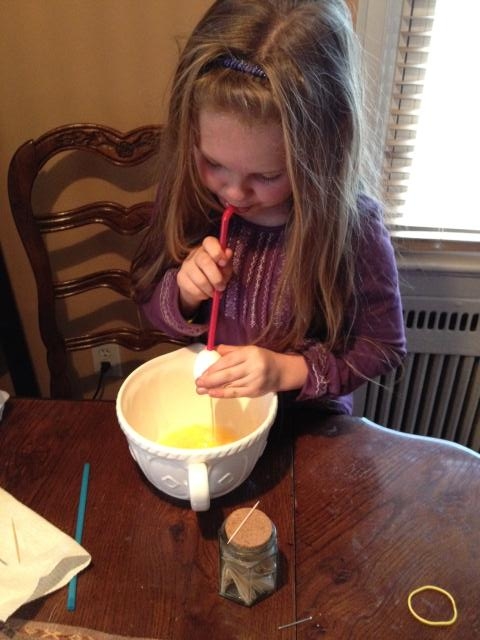
4. Holding the egg over the bowl, place the straw over the smaller hole and blow and blow and blow until all the egg comes out.  Stella said this was hard work and that her lungs hurt!  Once all the egg is out you will want to rinse the egg in water, get some inside the egg, swish around and then blow out the water.  Place back in the egg carton to dry – turning the egg at least once.

5. Repeats steps 2 – 4 until all your eggs are done.  We allowed our eggs to dry over night.

6. Now it is time to decorate.  Cover your work area with newspaper and get all your decorations out.

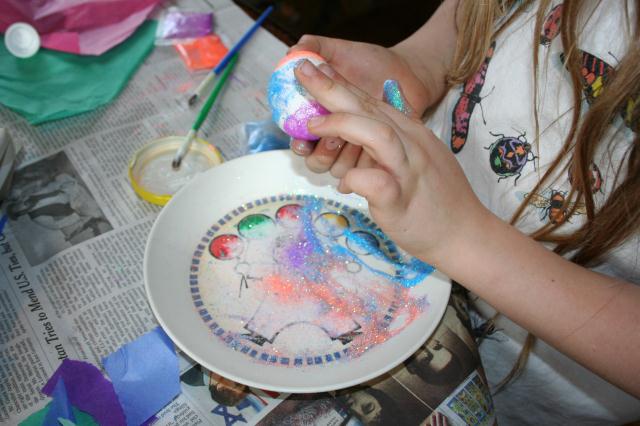
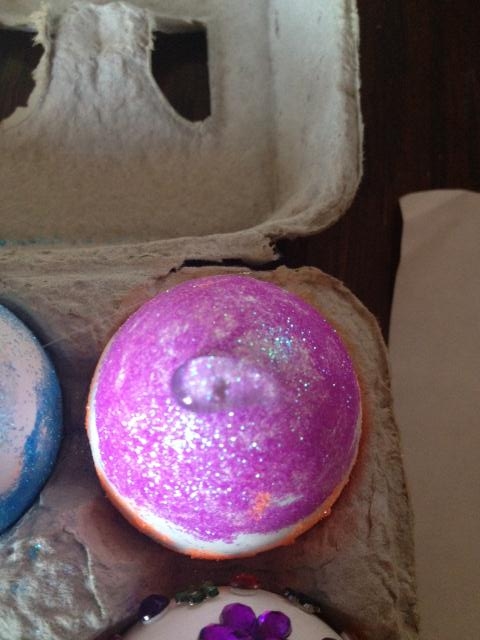
7. For glitter:  Using a paintbrush, paint the part of the egg that you want to glitter with Elmer’s glue, sprinkle the glitter over the egg (best to have a bowl underneath to catch the excess glitter), using your finger to help spread the glitter.  Allow to dry and then glitter more of the egg.

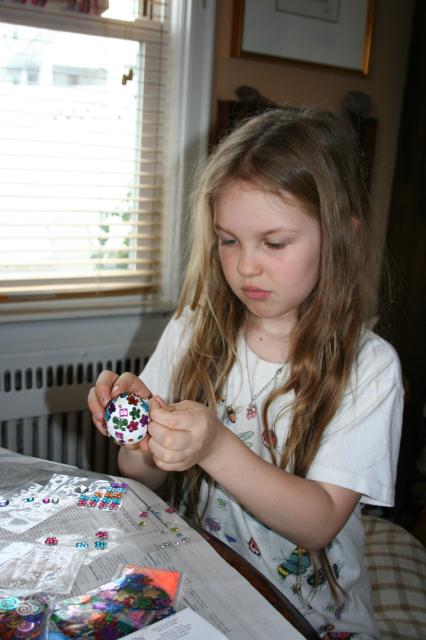
8. For the stick on gems:  Pretty self explanatory – stick the gems on where you want them.

9. For decoupage:  Tear up pieces of different colored tissue paper and using a paint brush put some decoupage glue on the tissue paper, place on egg, smoothing out the paper and then coat the top with decoupage glue.  Once you have covered the egg with tissue paper do one or more coats of decoupage glue over the entire egg.  Allow to dry.

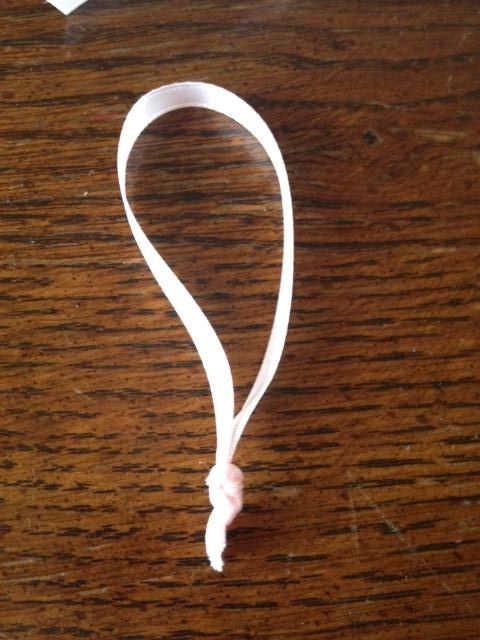
10.  Cut pieces of ribbon about 6″ long, loop, tie in a knot and secure on the top of the egg with glue gun.  Hang your eggs on an Easter tree, from door frames or place in a basket (with or without the ribbon).


11.  Pack them away with care (an egg carton works great) and you will have decorated eggs for years to come!

Digiprove sealCopyright secured by Digiprove © 2012
Posted in Kids Crafts | Tagged , , | 5 Comments

Almond Crusted Salmon With Parsnips and Kale

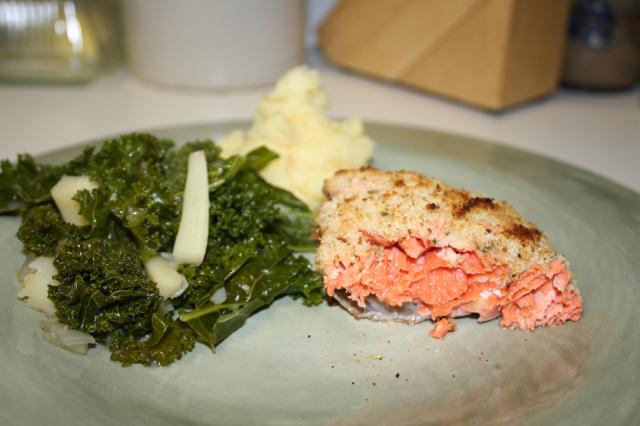
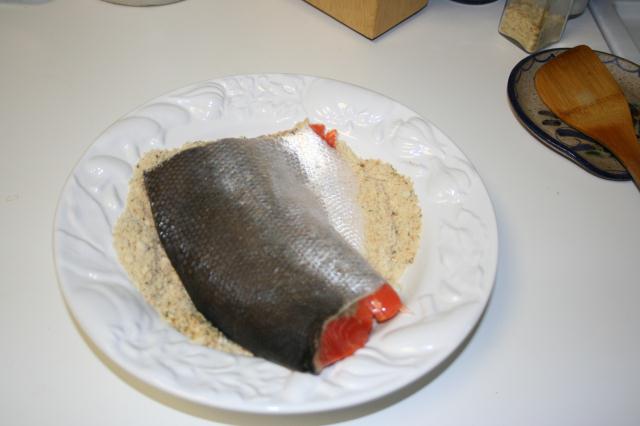
Being the month of the parsnip, found another recipe I had to try!  Decided to pair with salmon, Stella’s favorite fish.  We went to the fish counter at the store and looked over the salmon and of course checking my Seafood Watch app (http://www.montereybayaquarium.org/cr/cr_seafoodwatch/sfw_recommendations.aspx) to find out best choice.  Looking at the salmon that said Atlantic caught – I noticed in the fine print it said color added.  WHAT, did I read that right!?  I did and then I noticed it on other tags – colored added – why, how, with what ingredients?  If color has to be added to make it look more appealing to the consumer, something is not right.  Atlantic salmon is on the Seafood Watch list as one to avoid – we did and I can see why.  We went with wild caught Chinook from Alaska, best choice.  The color was absolutely beautiful, the perfect “salmon” color.  So now, how to cook it.  The weather turned cold, so grilling was out.  Putting my thinking cap on and looking at what ingredients were in the house – I came up with Almond Crusted Baked Salmon, yum!

Almond Crusted Baked Salmon

Ingredient

Wild caught, Alaskan salmon (about 3/4 pound for 2 people)
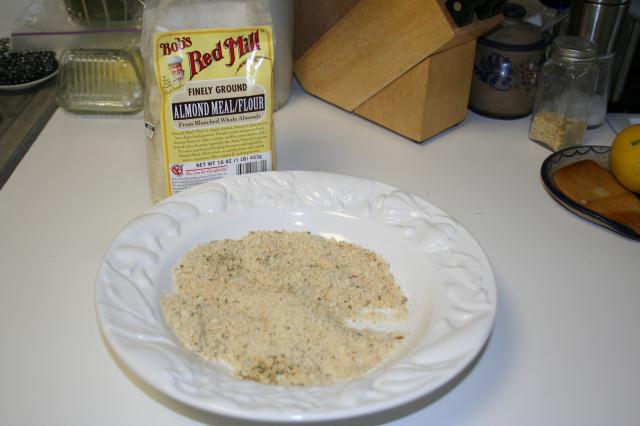
Almond meal
Organic bread crumbs
Lemon
Mixture of herbs
Olive oil

1. Preheat the oven to 500 degrees and lightly grease a shallow baking dish with olive oil.

2. Rinse and pat dry the salmon.

3. Mix together 1/4 cup almond meal and 1/4 cup organic bread crumbs, or whatever ratio you prefer.  Add about 1 Tbl of mixed herbs, your choice.

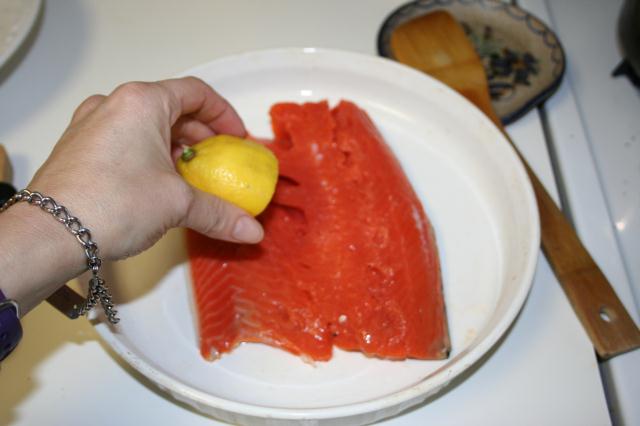
4. Cut a lemon in half, squeezing, coat both sides of the filet.

 
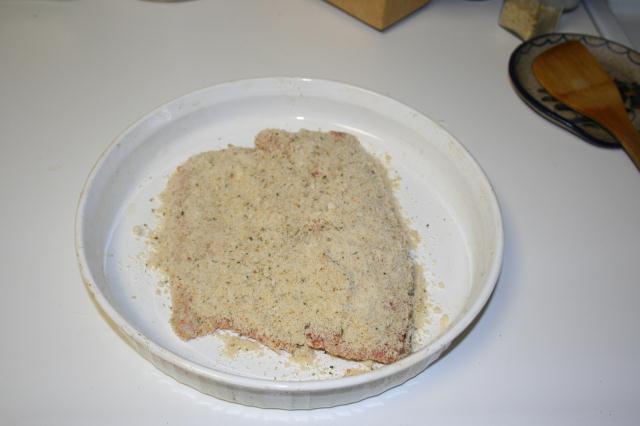
5. Dredge the filet through the almond meal mixture.  Place the filet, skin side down in the baking dish.  Taking the leftover almond mixture, sprinkle on filet and press to make sure it is on there.

6. Bake for about 15 minutes or until the fish flakes off or to the doneness of your liking.

Serve with parsnips and kale, recipe below.

Kale and Parsnips (thanks to Pioneer Valley Growers Associations www.pvga.net)

Ingredients (Serves 4)

1 cup onions, halved and sliced
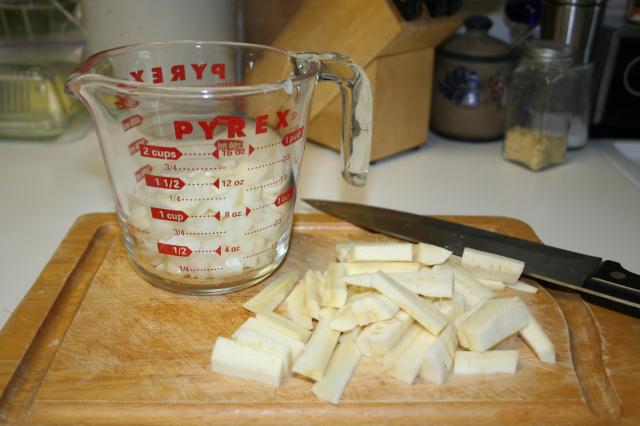
1 cup parsnips, halved and sliced
1 Tbl olive oil
1 cup water
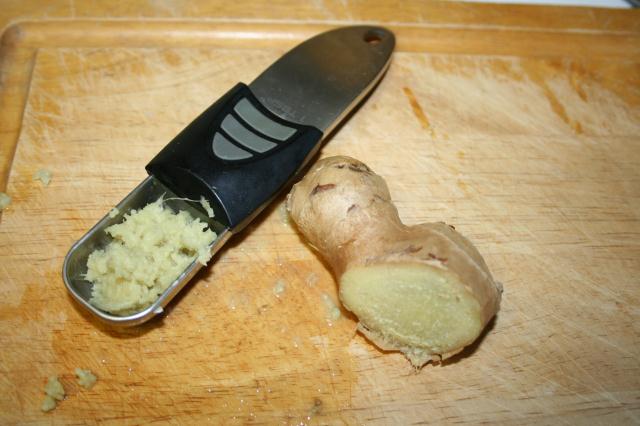
2 Tbl ginger, minced
1 qt. kale, veins removed and cut into bite sized pieces

1. Prepare all ingredients

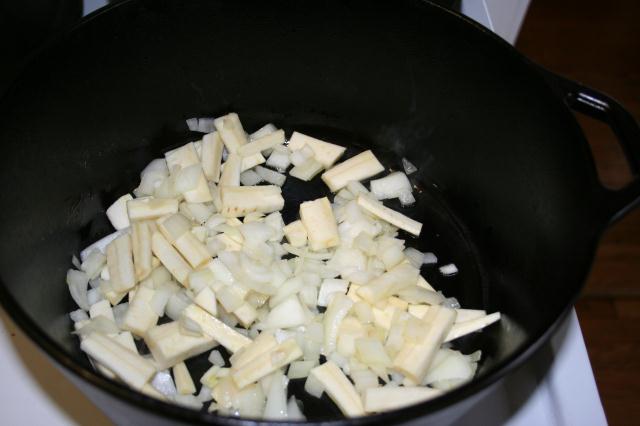
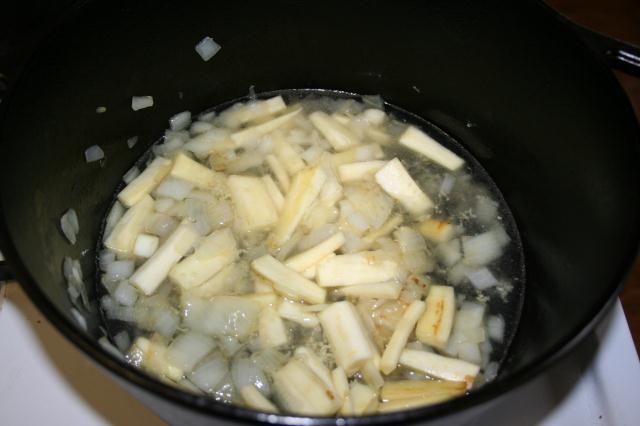
2. Saute the onions and parsnips in oil for 5 minutes, stirring occasionally to prevent burning.


3. Add the water and ginger, cover and simmer for 4 – 5 minutes.


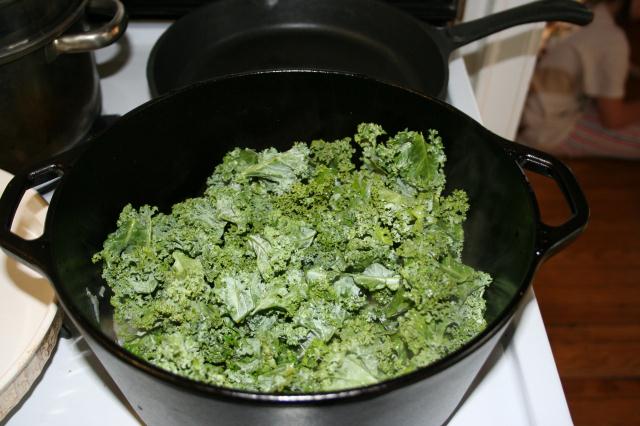
4. Add the kale and continue cooking 4 – 5 minutes longer, stirring occasionally.

Serve!

Digiprove sealCopyright secured by Digiprove © 2012
Posted in Dinner, Recipes, Sides | 6 Comments

Kids Craft Corner – Making an Easter Wreath

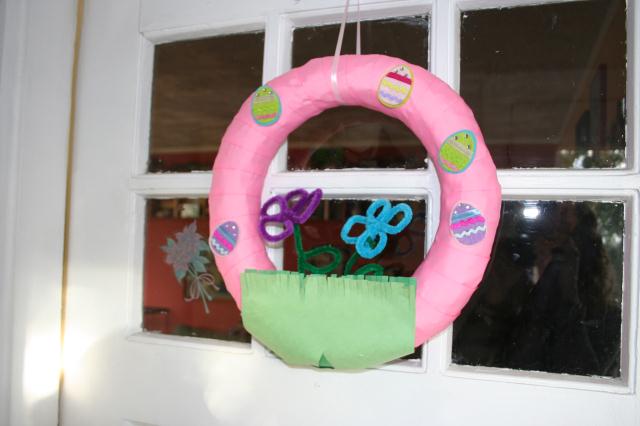
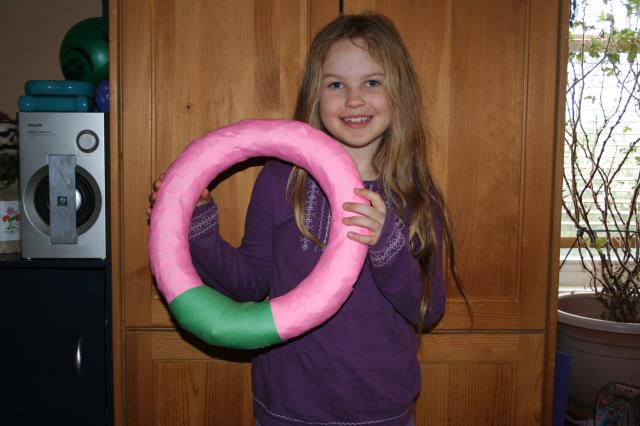
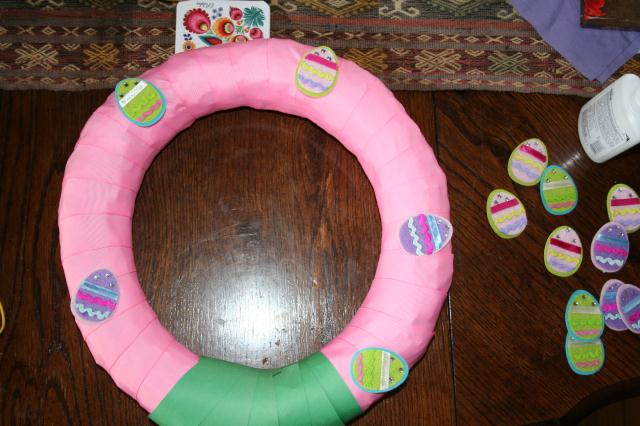
The St. Patrick’s day wreath is down and our door was looking a little barren – so what did we do?  We made an Easter Wreath.  Stella had wanted this wreath bigger than the last one – so being the good mom that I am, I got the next size up.  I thought I was getting enough ribbon to wrapped it – but I was wrong and we were in a quandary.  Putting both our creative minds to work we came up with a way to get around that – and the funny thing is that we both thought of the same idea!  I am glad that we did not have enough ribbon because our wreath turned out better than it would have if we had had enough.

Making an Easter Wreath

Materials Needed

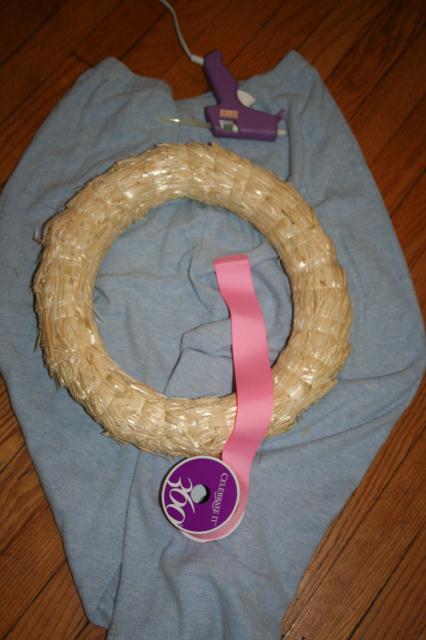
Straw wreath
2 spools of pink ribbon
Glue gun
Glue sticks
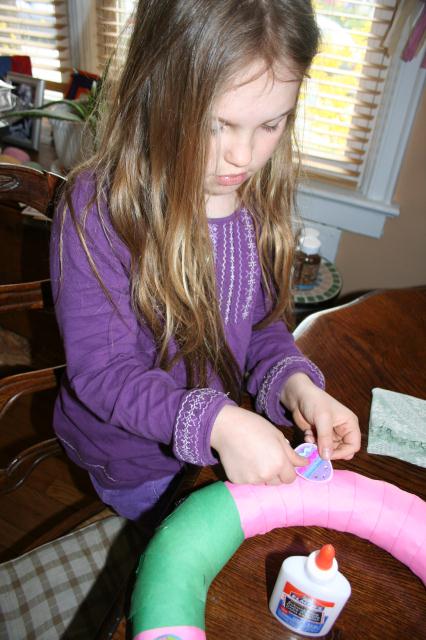
Decorations (we used pre-made felt eggs)
Elmer’s glue
Pipe cleaners
Green construction paper (two different greens)
Ribbon for hanging
Scissors

1.  Using a glue gun, secure the ribbon to the wreath and wrap almost all the way around.  An adult needs to do this part – the glue is very hot.

2. Cut green strips of construction paper and wrap the remaining part of the wreath.


3. Decorate your wreath with items of you choosing.


4. Make flowers out of pipe cleaners.  We used two of the same color for the petals and one for the stem and leaf.  With the 2 colors – each pipe cleaner will have 2 petals – leave a “stem” so you can connect the 2 along with the green stem.  Using the glue gun glue them to the wreath on the construction paper part.

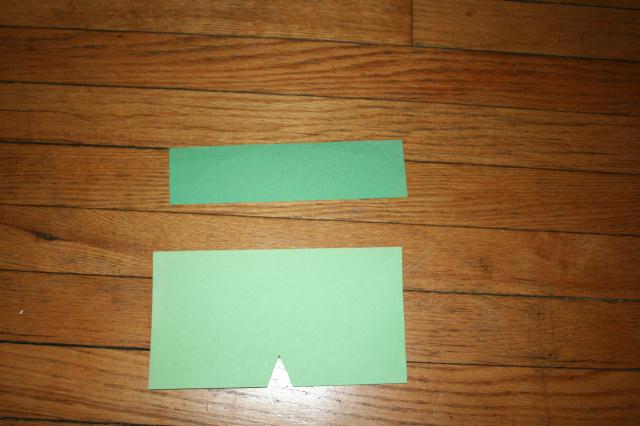
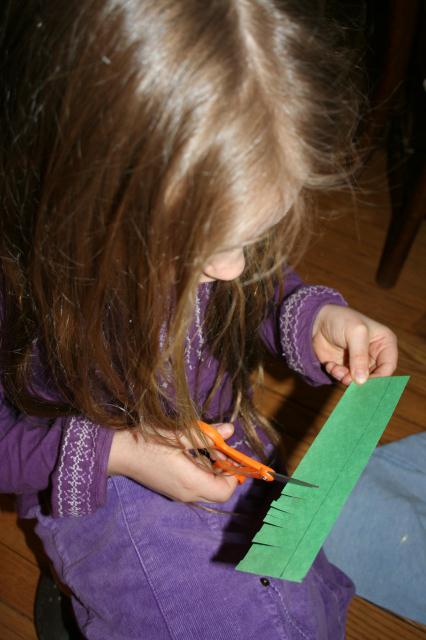
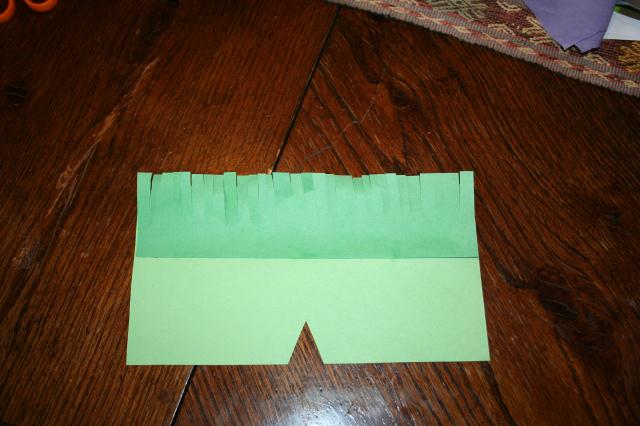
5. Measure the part of the wreath that is wrapped with construction paper and measure a rectangle that is a little longer than the wrapped part and wide enough to cover the stems of the flower and secure to the bottom on the wreath.  We used two different greens.  Using scissors cut your grass on both pieces of construction paper – you will then glue them together with Elmer’s. I found that cutting a triangle in the bottom of the paper made it easier to wrap on the wreath.


6.  Attach the grass to the wreath with the glue gun.

7. Tie a ribbon on the top of the wreath so you can hang it.  Happy Easter!

Digiprove sealCopyright secured by Digiprove © 2012
Posted in Kids Crafts | Tagged , | 3 Comments

Add Some Pizazz To A Pair Of Jeans

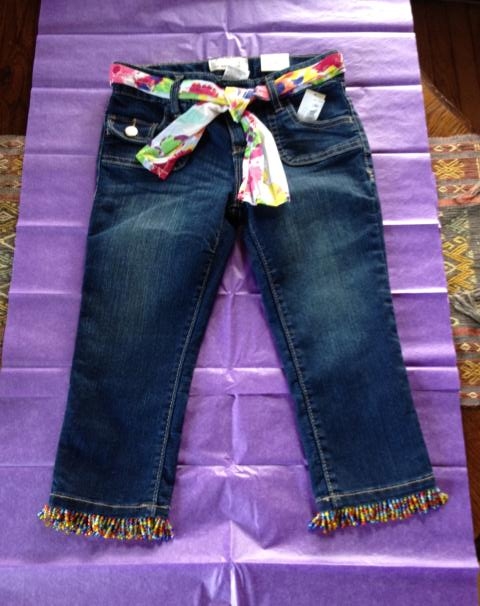
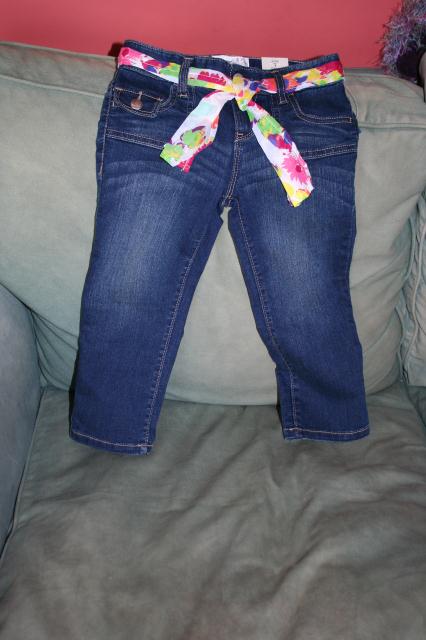
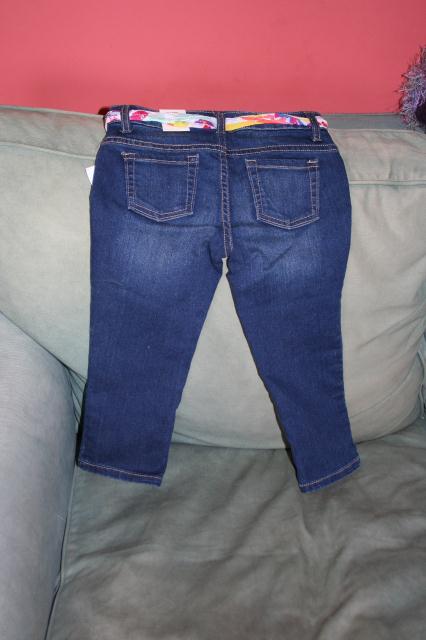
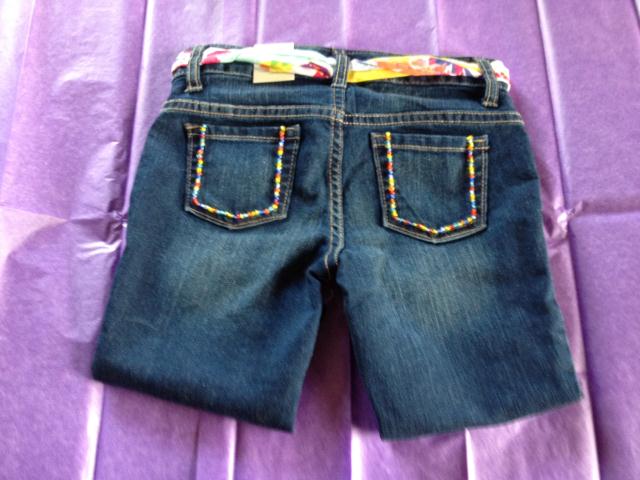
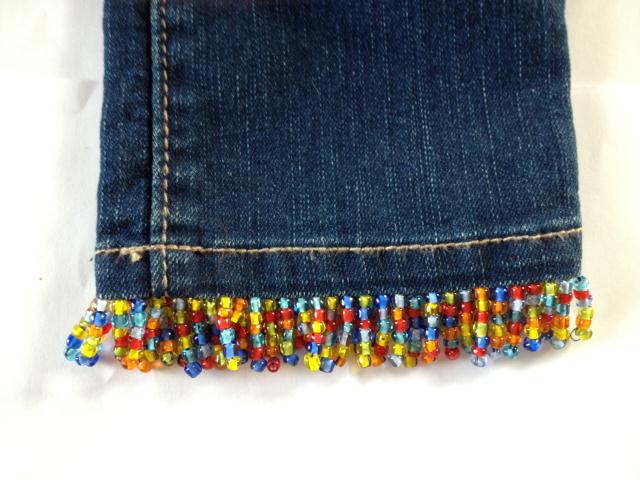
About 12 years ago I purchased a pair of capri pants that had fringe on the cuffs – I still have them and love them.  When Stella was little she loved to come over and run her hand over the fringe and play with them, so when she was older I fringed a pair of her capris – she wore them out!  For my niece’s birthday present I decided I would fringe a pair of jean capris for her.  The hardest part was finding a simple pair of jean capris without any design on them.  I purchased some multicolored glass beads and was all ready to start.

Beaded Fringe Jeans

Items Needed

Capris
Beads
Thread
Needle with an eye that will go through the beads


I also decided to bead around each back pocket.

1. Get all materials out.  I like to pour the beads into a shallow dish, it makes them easier to use (at least for me) and thread your needle (double thread).

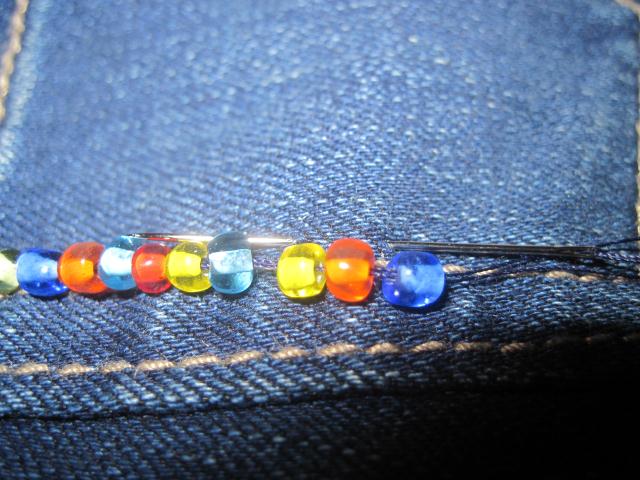
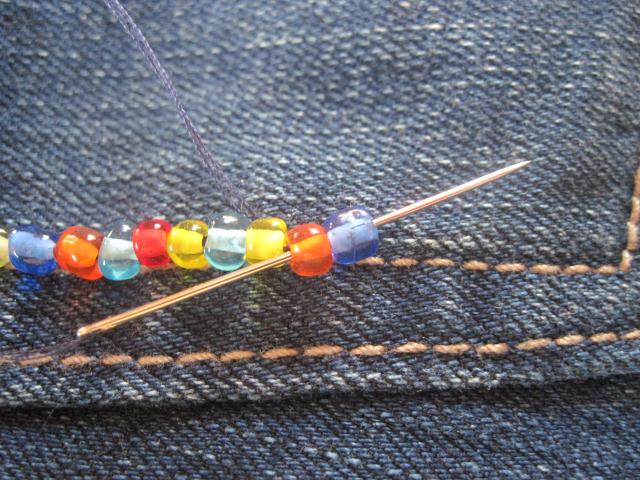
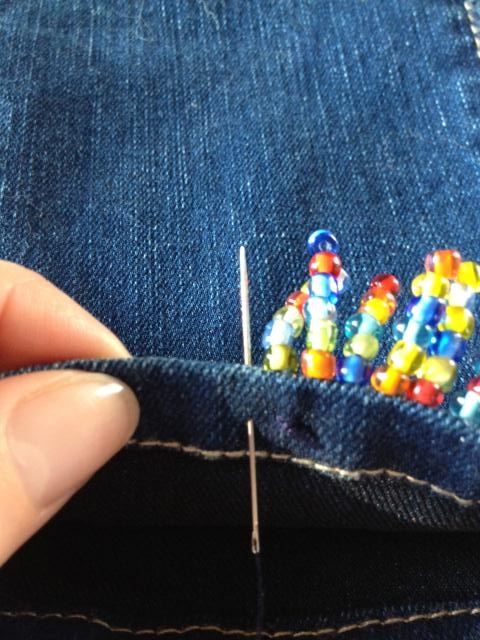
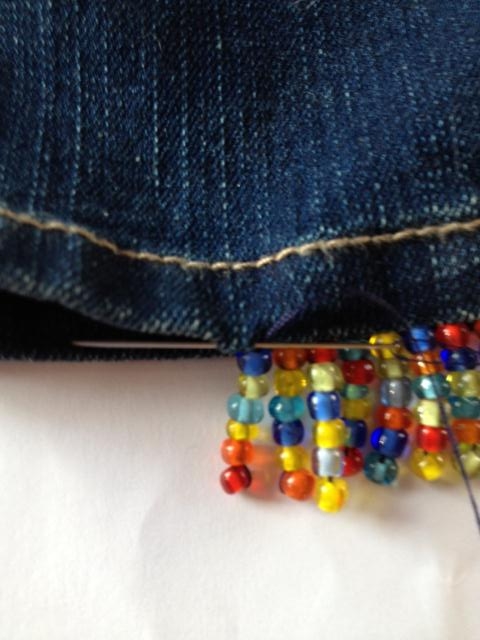
2. I started with the back pockets.  String 3 beads onto the needle, push them to end of thread, lay beads on the jeans and stitch through fabric so they lay flat.  Push the needle back up through the fabric behind where you just entered – you want to go back through the last 2 beads.  String 3 more beads on and continue in the same way until you are done.  You might have to do 1 or 2 beads at a time when turning the corners.


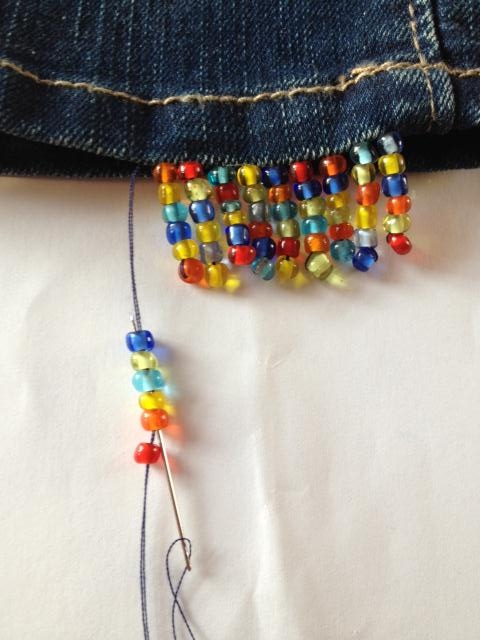
3. Now to start the fringe.  Since you will be doing it on the bottom seam – you will not go all the way through the fabric – just through the first piece.  Thread the needle and knot the end, put the needle through on the inside of the seam coming out where the seam folds.


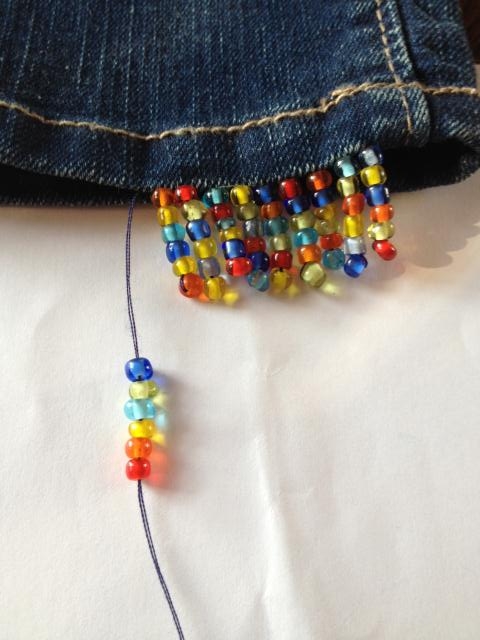
4. To start the fringe, string as many beads as you want for the length – I used 6 beads.  Go back through all the beads, but NOT the last one that you put on the needle, push needle through the material coming out where you want to start the next fringe.  Continue in this way until you have fringed the whole leg and then do the other leg.


You will want to wash these on the delicate cycle or by hand and then hang to dry.  Stella grows like a weed and I think I will take some of her pants that are too short, cut and surge the hem and then fringe with beads – making an old pair of pants into new ones, which is great because the pants fit everywhere else – I might even try a loop fringe – get back to you on that one!  Happy wearing!

Digiprove sealCopyright secured by Digiprove © 2012
Posted in Crafts | Tagged , , | 2 Comments

Parsnips – The Other Root Vegetable

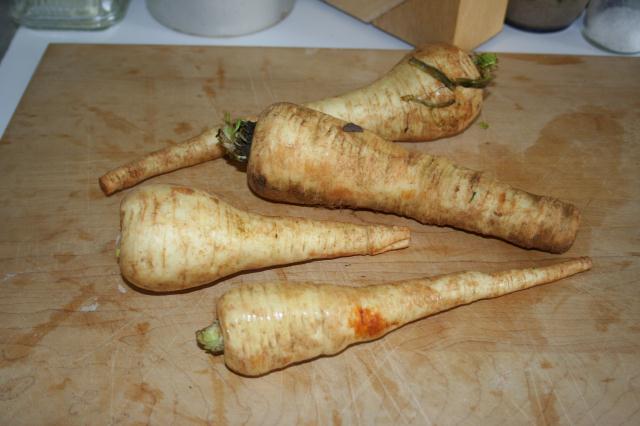
March is the perfect month for parsnips.  I have been missing out – usually I just put parsnips in my soup, but I need to expand my uses.  I was eating dinner out recently and the side was roasted carrots and parsnips – instant love!  These will definitely make it into the garden this year!  They were not easy to find – but I did find organic parsnips at Whole Foods.  Since these grow as a root, duh! – the soil is even more important – so please only choose organic for these or any root vegetable.

Try both or one of these simple parsnips recipes – I think you will also get hooked!  Parsnips are full of nutrition – they contain complex carbohydrates and fiber which will help with your digestive health and help lower cholesterol and they also have calcium, potassium, folic acid, iron, zinc and B vitamins – so they have A LOT to offer!

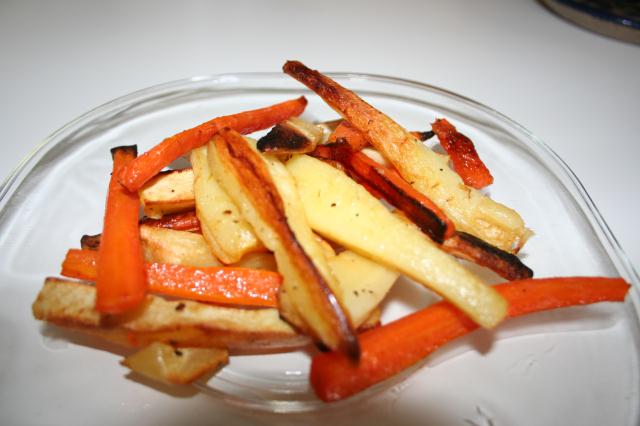
Oven Roasted Parsnips and Carrots

Ingredients

1 pound parsnips (choose medium sized)
1 pound carrots
4+ gloves garlic (cut in half)
Olive oil
Salt and pepper for seasoning

1. Wash and peel the parsnips and carrots.

2. Preheat the oven to 475 degrees.

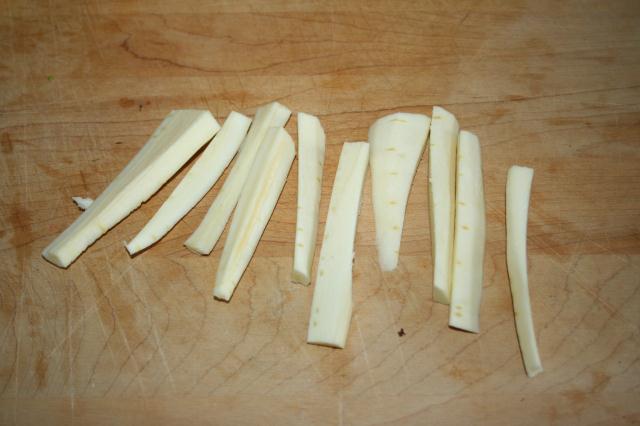
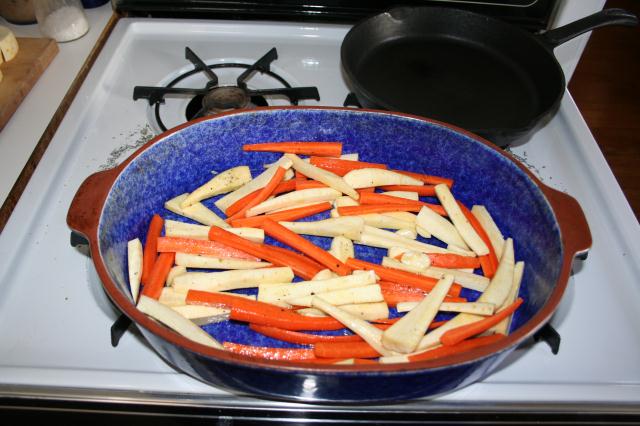
3. Cut them into julienne strips about 3″ long, you want them all about the same length and thickness.

4. Peel and cut your garlic.

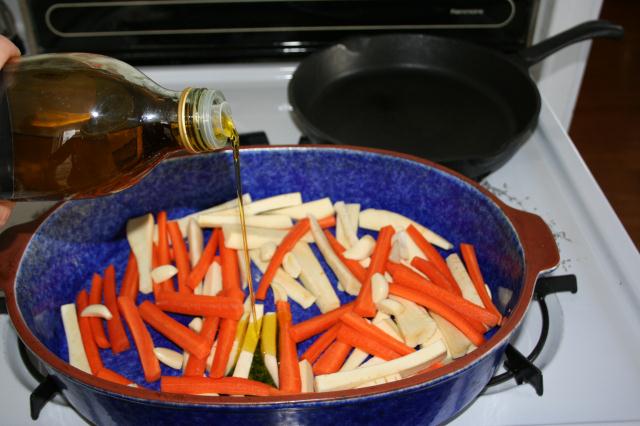
5. Place all in a baking dish and pour some olive oil, toss and season with salt and pepper.  You want them in a single layer.


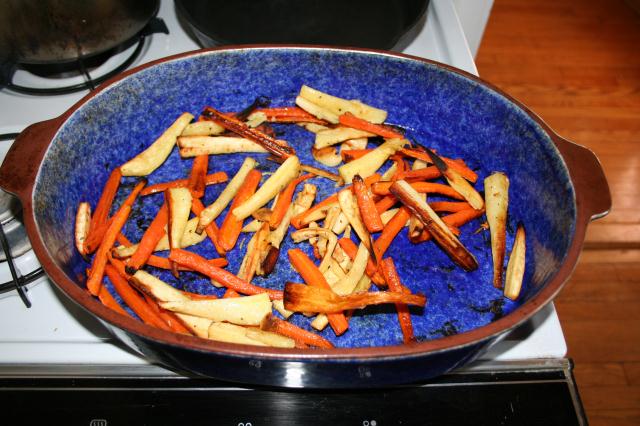
6. Bake for 30 – 45 minutes, tossing every 10 – 15 minutes.  Mine cooked in about 30 minutes – check them each time you toss.

Serve as the side.  Stella loved these and said they tasted like ice cream!

Mashed Parsnips

Ingredients

Parsnips (about a pound)
Butter

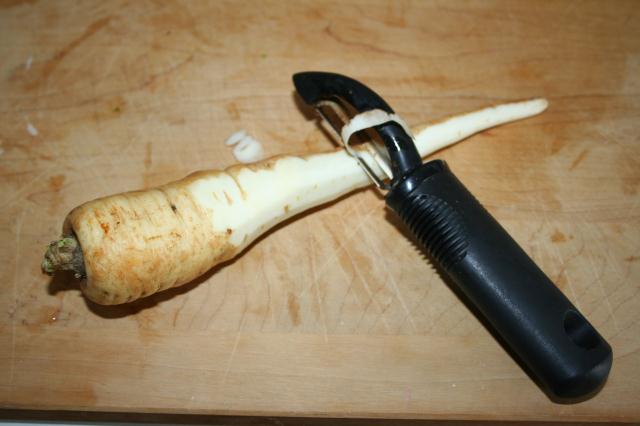
1. Wash and peel the parsnips.


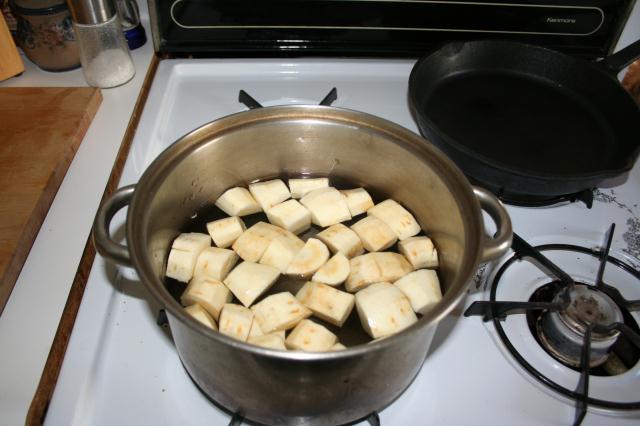
2. The center of the parsnip is tough (see picture and you can see the center) Cut into pieces that are about 3″, when you get to the fatter end, depending on the size of the core – you will want to cut around that. You want all the pieces about the same size.

3. Place the parsnips in a pot of salted water.  Cook for about 10 minutes or until soft.

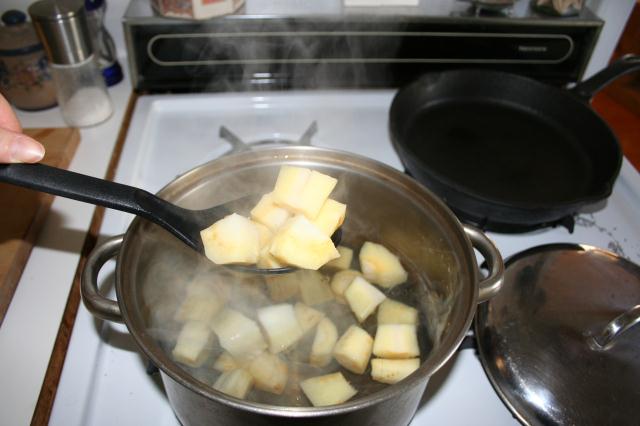
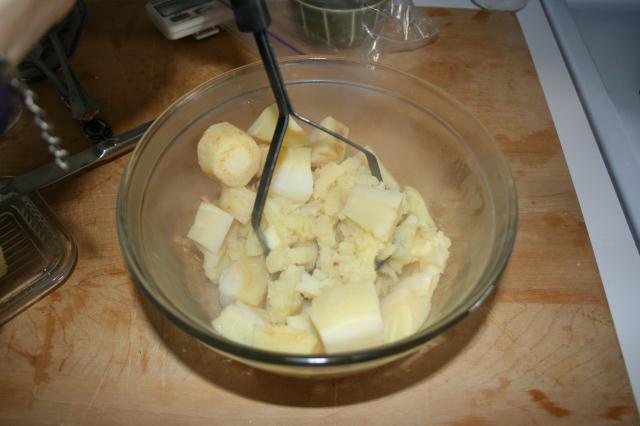
4. Turn the water off and remove the parsnips with a slotted spoon and place in a glass bowl.  Do not throw out the water.  Put a couple pats of butter in the bowl and mash with a potato masher.  If it seems dry add more butter or some of the cooking water.  Let the remaining cooking water cool and use to water your plants.


Serve as a side.  Parsnips go well with meats and fish.  Stella inhaled these!

Digiprove sealCopyright secured by Digiprove © 2012
Posted in Recipes | Tagged | 3 Comments